faq ยท consideration

Fruit Pulper Questions with Clear Decision Routes

This FAQ answers narrow fruit pulper questions without replacing the site's technical guides. Each answer states a bounded equipment principle, screen consideration, hygienic boundary or maintenance scope, then points to the page that owns the full decision. The questions are editorial rather than copied from search results, and they avoid consumer appliances, unrelated pulper categories, generic food advice and unsupported commercial claims. Use the index to find the correct guide whenever a question needs material data, project evidence, a trial plan or site-specific review.

  • Evidence-bound guidance
  • English technical edition
  • Manufacturer resource

Use the FAQ as an index, not a substitute for engineering decisions

A concise answer should resolve the meaning of the question without pretending to select a machine. Mechanism answers describe how prepared fruit can be conveyed or worked against a perforated screen and how pulp and coarse reject form separate streams when material permits. They do not establish the configuration, performance or suitability of an unspecified machine. The linked working-principle and types guides carry the fuller comparison when a reader needs to examine the complete separation path.

Screen questions need the desired pulp texture and the size and behaviour of seeds, fibres, skins or other reject structures. Hygienic questions need the wider facility context because layout, operation and sanitation belong within contamination-control and food-safety arrangements. The FAQ can identify those boundaries quickly, while the materials, selection and hygienic-design pages provide the records and review sequence needed for an actual project.

Maintenance answers identify the components and access points that belong in a planning scope; they do not publish service methods or intervals. Formal equipment status is also a separate evidence question. General hygienic principles cannot establish the standing of a particular machine. When a question reaches either boundary, the linked guide explains what documentation, identity and site context must remain visible.
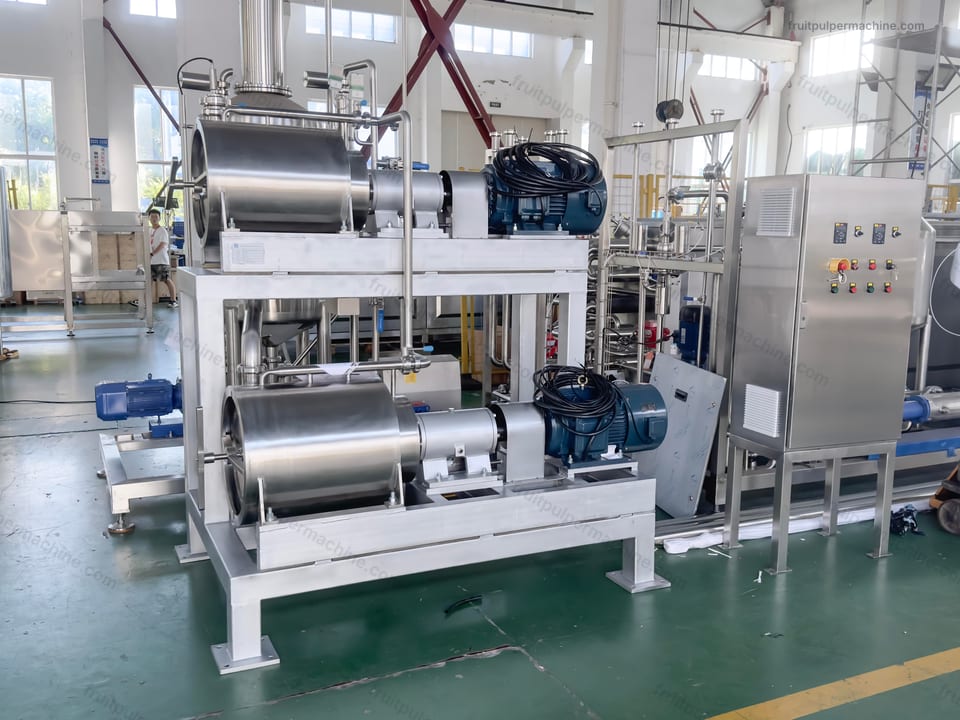
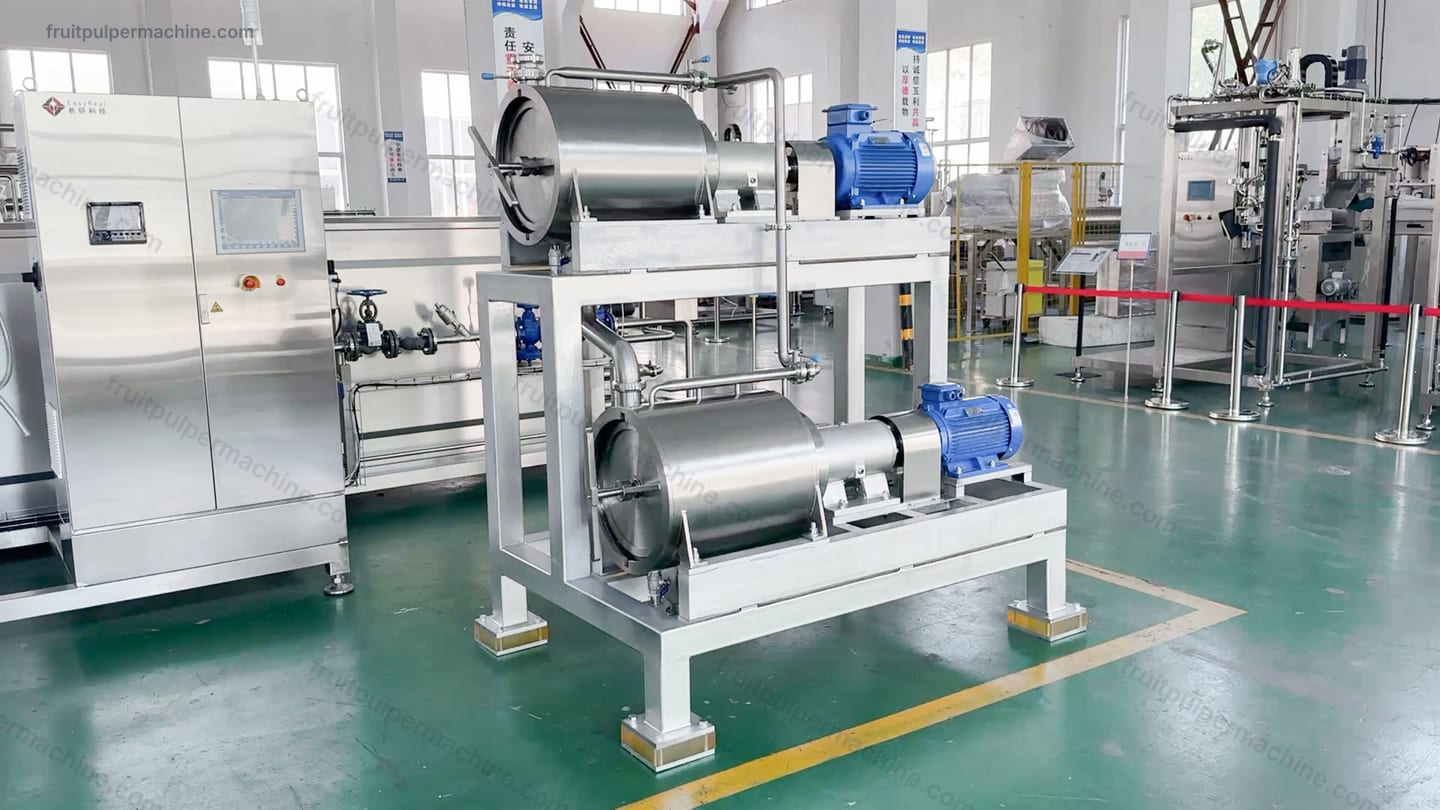
Angled fruit pulper view showing cylindrical housing, drive, frame, and discharge area
Fruit pulper housing and discharge reference

Route each question to the page that owns the decision

Route each question to the page that owns the decision
TopicQuestion boundaryWhat the FAQ can establishWhere detailed review continues
Moving element and separation pathHow prepared fruit is presented to a perforated screen and divided into useful and retained streamsA screw, worm shaft or beater assembly can convey and press or work prepared fruit near the screenOpen the working-principle guide for the complete feed, contact, screen, pulp and reject sequence
Configuration languageWhether a type label explains the moving action and screen relationshipThe internal assembly can differ, so the mechanism should be described rather than inferred from a broad labelOpen the types guide to compare screw, auger, beater and paddle descriptions by separation duty
Screen and material fitWhich pulp texture is desired and which seeds, skins, fibres or other structures should remain with rejectScreen opening and geometry need a material and product context rather than a fruit name aloneOpen the materials guide for fruit behaviour or the selection guide for a reviewable screen strategy
Facility hygiene systemHow equipment layout, operation and sanitation connect to wider contamination controlThe machine belongs inside the facility food-safety system and cannot define that system by itselfOpen the hygienic-design guide to map intended use, contact boundaries and site verification responsibilities
Formal equipment statusWhether a general design reference establishes the standing of a particular machinePrinciple-based guidance and machine-specific status evidence have different identity and scopeOpen the hygienic-design guide for the documentation and configuration boundary behind any formal statement
Maintenance component scopeWhich screen, moving, bearing, sealing, drive, fastener and access areas belong in the planning recordThe component list defines review coverage without creating equipment-specific methods or timingOpen installation and maintenance for planned scope, or troubleshooting for an observed symptom

Keep every short answer within its evidence boundary

  • A mechanism description explains how material can move toward a screen and separate into outlets. It does not establish output, recovery, quality or suitability for an unspecified fruit and configuration.
  • A screen answer remains incomplete until desired pulp texture is paired with the size and behaviour of material expected in reject. The linked selection guide owns that project decision.
  • Equipment layout and sanitation questions belong inside facility contamination-control and food-safety arrangements. The FAQ cannot replace the site's intended-use review, procedures or verification responsibilities.
  • A maintenance component list organizes scope. It does not specify how or when work occurs. Machine documentation, site procedures and authorized personnel govern equipment-specific activity.

Continue with the guide that owns the decision

Start with the equipment overview when the category is still uncertain, or open the linked technical page named in the relevant answer.

Review the fruit pulper overview

Frequently asked questions

Can the screen alone explain how a fruit pulper separates material?

No. The separation path also depends on how a screw, worm shaft or beater assembly conveys and works prepared fruit near the perforated boundary. When the material permits, softer pulp and liquid pass through while seeds, skins, pits or coarse residue leave separately. The working-principle guide connects those elements in sequence.

Do all fruit pulpers move feed with the same internal assembly?

No. Approved evidence describes screw, worm shaft and beater arrangements that convey, press or work prepared fruit against a screen. A broad pulper label therefore does not identify the actual moving action. The types guide shows how to compare configuration language through separation duty instead of assuming one universal assembly.

What normally passes through a fruit pulper screen?

When fruit condition and preparation permit, softer pulp and liquid that can cross the screen openings move toward the pulp collection path. The statement is a mechanism description, not a promise that every material will produce the same passing stream. The working-principle guide explains the full relationship between feed, screen and outlets.

What normally leaves through the fruit pulper reject outlet?

Seeds, skins, pits and other coarse residue can remain outside the passing pulp fraction and discharge separately when material and preparation allow that separation. The exact reject character depends on the fruit and duty, so the outlet description should remain material-specific. The working-principle guide traces where the streams divide.

Why should an equipment description identify both the moving element and the screen?

The moving assembly presents and works prepared fruit, while the perforated screen forms the pass-and-retain boundary. Naming only one part leaves the separation action incomplete and can make unlike configurations appear equivalent. The types guide compares pulper descriptions by the combined mechanism, screening duty and outlet arrangement.

Can screen choice be inferred from the fruit name alone?

No. Screen opening and geometry need the desired pulp texture plus the observed size and behaviour of seeds, fibres, skins and other retained structures. Fruit condition and preparation can change those observations within the same named fruit. The materials guide helps turn the fruit name into a useful behaviour description.

Which material features matter in a fruit pulper screen discussion?

Describe the structures expected to pass and remain, including relevant seeds, fibres, skins, pits and coarse residue. Connect them to the desired pulp texture and to the prepared material presented at the screen. The materials guide organizes those observations before a project moves into screen strategy and trials.

Why should desired pulp texture and retained material be written together?

A screen decision controls a boundary between the passing pulp fraction and the structures kept with reject. Describing only texture omits what the screen must retain, while describing only reject omits the product objective. The selection guide joins both observations into a reviewable screen strategy for representative material.

Does a fruit pulper layout replace the facility contamination-control system?

No. Equipment layout, operation and sanitation belong within the facility's broader food-safety and contamination-control arrangements. A pulper can be reviewed as part of that system, but the machine does not define the facility's responsibilities, procedures or verification. The hygienic-design guide maps this wider boundary.

Why should fruit pulper operation and sanitation be reviewed in the same site system?

Product movement, equipment layout and sanitation can affect the same contamination-control boundary. Reviewing them together shows where machine conditions depend on facility procedures and where site arrangements can affect the equipment review. The hygienic-design guide carries that relationship into intended use, installation and verification questions.

What should be verified before repeating a formal-status claim about a fruit pulper?

Treat formal standing as a separate evidence question. Verify the applicable scheme, the exact equipment identity, its configuration, the stated scope and the record issued for those particulars. General hygienic principles can guide a design review, but they do not establish the standing of a specific machine. The hygienic-design guide explains that boundary.

Does a maintenance component list define fruit pulper service intervals?

No. The list identifies screen, rotor or shaft, bearings, seals, drive parts, fasteners and cleaning access as areas that belong in maintenance planning. It does not set equipment-specific timing or methods. The installation and maintenance guide explains how to preserve scope while leaving instructions to controlling documents and site procedures.

Why should seals and cleaning access points appear in a maintenance register?

Maintenance planning covers more than the obvious moving elements. Seals and cleaning access points belong beside the screen, shaft, bearings, drive parts and fasteners so observations stay mapped to the complete equipment boundary. The installation and maintenance guide turns that scope into a planned readiness and documentation review.

Why name bearings, fasteners and drive parts separately in maintenance records?

A broad mechanical label can hide where an observation belongs. Naming the relevant areas creates a clearer maintenance scope and helps later records distinguish screen, moving, bearing, sealing, drive, fastener and access observations. The installation and maintenance guide explains how that component map supports planned review without inventing machine instructions.

What should be reviewed after a specific fruit pulper symptom appears?

Continue with the troubleshooting guide rather than turning the maintenance component list into a diagnosis. The list identifies relevant equipment areas, while symptom review needs the observed condition, material context and safe project boundary. The linked guide organizes that investigation without publishing equipment-specific repair or operating instructions.

Reviewed for practical use

Editorial Review
Reviewed 2026-07-17

Technical Content Review
Reviewed 2026-07-17