working principle · consideration
How a Fruit Pulper Moves Material Through Separation
A fruit pulper follows a connected mechanical separation sequence rather than a single crushing event. Prepared fruit enters a controlled path, a moving element conveys and works the material, and a perforated boundary separates the portion that can pass from the coarse fraction that must leave by another route. Sound evaluation follows that complete path. Feed condition, rotor action, screen presentation, pulp removal, and reject discharge interact, so an isolated setting cannot explain the result. Published operating examples can clarify which variables researchers observed, but they remain attached to their tested fruit, prototype, method, and limitations.
Read the machine as a separation boundary
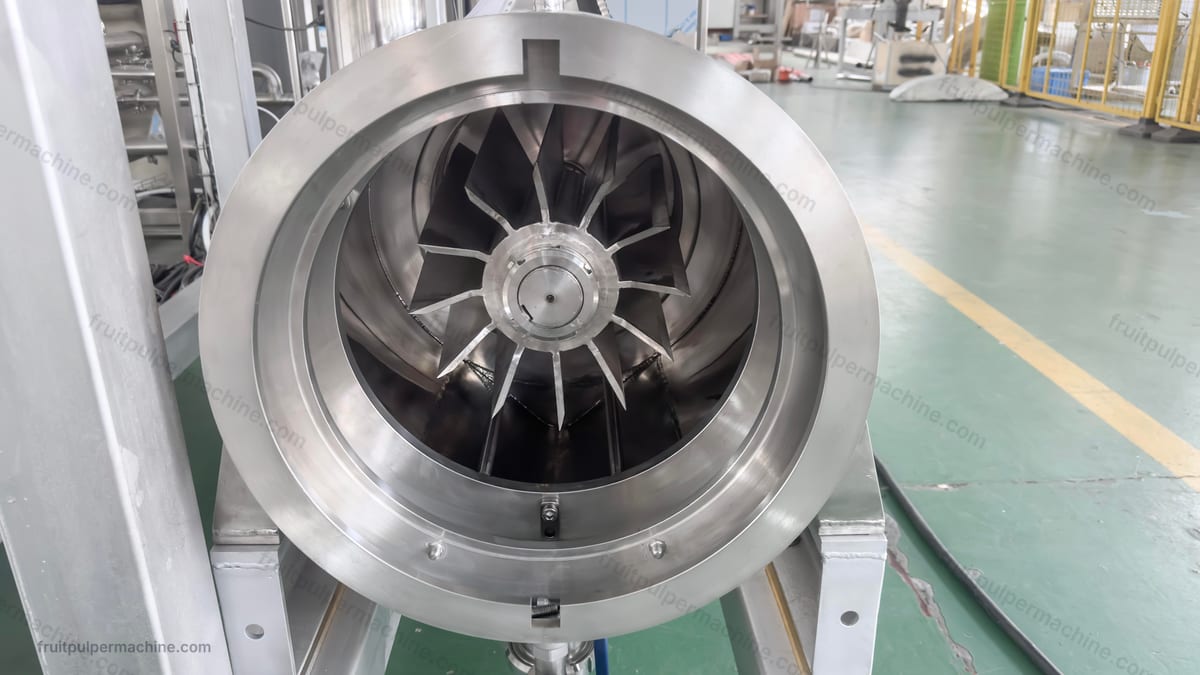
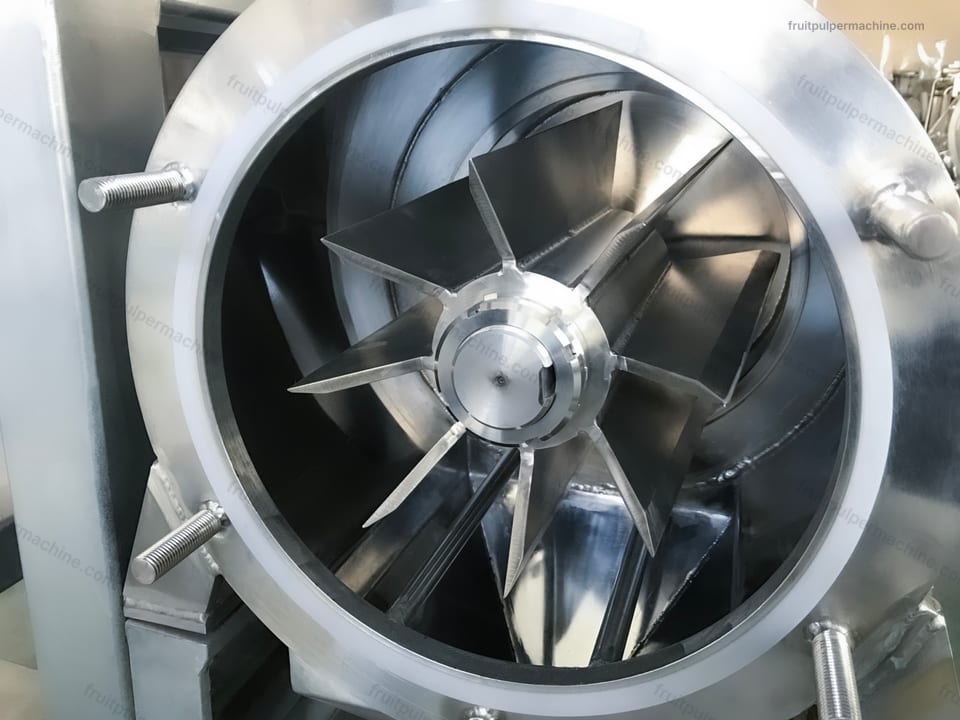
The working principle begins with a distinction between deformation and separation. A rotating screw, worm shaft, or beater assembly can carry prepared fruit while pressing, scraping, or agitating it near a perforated screen. That motion changes the fruit enough for softer material to approach the openings, but the screen determines which fraction can pass. The useful output is therefore created by the relationship between moving element, feed, and perforated boundary, not by rotor motion alone. Geometry and motion differ among machines, so this functional description should guide observation rather than imply a universal internal arrangement.
Inside the separation zone, material follows two linked paths. Pulp and liquid that meet the opening and condition requirements move through the screen toward collection. Seeds, skins, pits, and coarse residue that cannot pass remain on the working side and move toward reject discharge. Neither path is absolute. Fruit structure, preparation, and screen choice influence what reaches each outlet, while retained material must continue moving rather than accumulating without control. Evaluation should therefore compare both pulp and reject, because an apparently smooth pulp stream can conceal an overloaded or poorly cleared reject path.
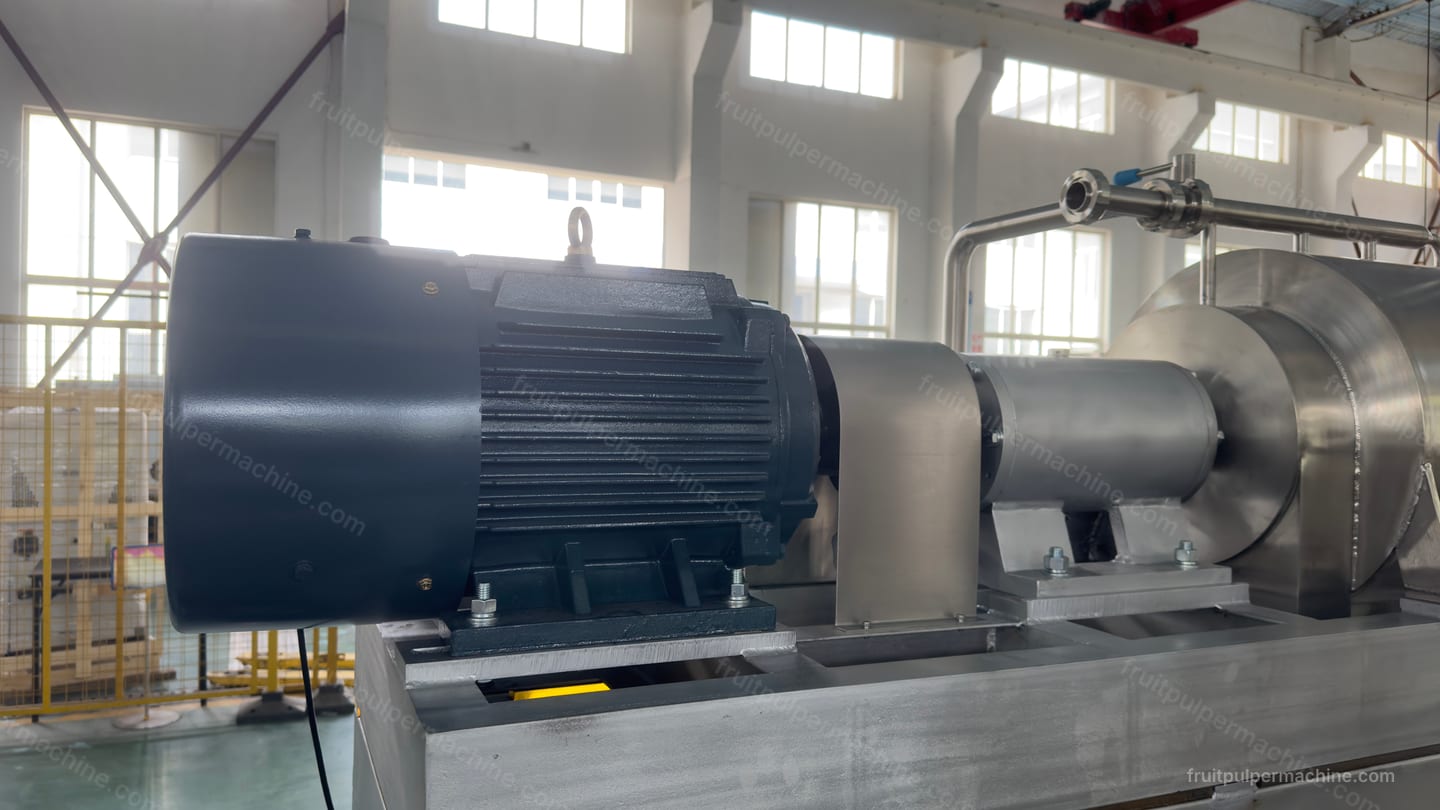
The machine functions as a chain of dependent zones. Feeding sets the material condition presented to the rotor. Conveying determines whether that material advances consistently. Contact with the moving element exposes and redistributes softer tissue. Screening divides the worked material according to the selected boundary. Pulp collection must remove the passing fraction, while reject discharge must clear the retained fraction. A disturbance in any zone can appear somewhere else: irregular feeding may look like unstable separation, and restricted reject movement may change how material behaves near the screen. Diagnosis is stronger when it follows the chain instead of assigning every symptom to rotor action.
Trace the pulping sequence from feed to outlets
Present prepared fruit
The sequence starts before the moving element touches the fruit. Preparation determines whether the feed contains pits, peel, fibrous pieces, or size variation that the selected mechanism and screen can reasonably handle. Consistent preparation does not make every piece identical, but it gives the separation zone a more interpretable input. When maturity, cut size, or prior treatment changes, the material may deform and release liquid differently. Recording those changes is essential because later differences in pulp or reject cannot be attributed confidently to the machine when the incoming condition is unknown.
Establish an even material supply
Feeding should present material at a rate and pattern that the internal conveying action can accept without long gaps or sudden surges. The relevant question is not simply how much enters, but whether the working zone receives a stable load with known preparation. A surge can temporarily change contact, screen coverage, and reject movement, while a gap can produce an output that appears steadier than the actual feed. Published research treats feed rate as an operating variable, yet any reported setting belongs to its experimental method. A practical review therefore observes feed regularity before interpreting outlet behaviour.
Convey material through the working zone
A screw, worm, or beater arrangement creates motion that advances and redistributes prepared fruit. Conveying is not merely transport from inlet to outlet. It controls how material is presented to the screen and how retained solids continue toward discharge. The internal element may combine forward movement with pressing, scraping, or repeated contact, depending on its form. If advancement is uneven, some material can receive a different contact history from the rest. The observable principle is therefore continuity: material should enter, interact with the moving element and screen, and leave through the appropriate path without assuming that a named rotor geometry behaves identically in every design.
Develop controlled mechanical contact
Rotor contact works the fruit so that softer tissue and liquid can approach the perforated boundary. The useful action may include pressing, impact, scraping, or agitation, but those words describe functions rather than a promised result. More intense motion can alter the rate of contact while also changing residence, loading, and the condition of retained solids. The aim of observation is to connect the action to both outlets: note whether pulp passes consistently, whether coarse material remains appropriately separated, and whether the reject path continues to clear. A single setting cannot be judged apart from the feed and screen conditions used with it.
Present worked material to the screen
The screen is the physical decision boundary. Material capable of passing through its openings moves toward pulp collection, while seeds, skins, pits, and coarse residue remain on the working side when their size and condition prevent passage. Separation quality cannot be inferred from opening geometry alone because the fruit, preparation, rotor interaction, and screen loading affect what reaches the boundary. The screen should be evaluated as part of a system: observe the passing fraction, the retained fraction, and any change in presentation along the working length. Complete removal of every unwanted component should not be assumed from the mechanism description.
Remove pulp and reject through separate paths
The final step is simultaneous outlet control. Pulp collection removes the fraction that has crossed the screen, while reject discharge carries retained material away from the separation zone. These outputs should be reviewed together rather than as unrelated streams. A wetter reject can indicate that valuable soft material remains with the coarse fraction, but it does not identify a cause by itself. A coarser pulp can reflect feed, contact, or screen presentation rather than a single faulty component. The working principle is complete only when both outlets remain connected to the recorded inlet condition and the observed behaviour of the internal path.
Separate interactions from isolated symptoms
| Topic | Observed condition | Likely interaction to inspect | Interpretive boundary |
|---|---|---|---|
| Uneven material supply | Pulp flow rises and falls with visible changes at the inlet. | Compare preparation, feed continuity, conveying, and screen coverage before changing rotor conditions. | An unstable outlet cannot establish an internal setting while the inlet is uncontrolled. |
| Soft material remains with reject | The retained stream carries visible pulp or liquid with coarse solids. | Inspect fruit condition, contact, screen presentation, and reject movement as a connected path. | Outlet appearance identifies a review point but does not prove a universal correction. |
| Coarse material appears in pulp | The passing stream contains texture or residue outside the intended separation target. | Compare preparation, screen condition, material presentation, and the nature of the fruit. | A perforated boundary separates by actual material behaviour, not by its label alone. |
| Material remains against the screen | Screen presentation changes while retained solids advance slowly toward discharge. | Review feed condition, conveying continuity, rotor contact, and reject clearance together. | Changing speed without understanding material movement can shift the symptom rather than explain it. |
Use published operating examples only in study context
| Published evidence record | Bounded interpretation |
|---|---|
| Discrete extraction-speed test levels | This record preserves author-coded levels from a cottage-industry mango extractor experiment. The paper uses inconsistent language for motor, shaft, and extraction speed and does not report a measurement method. Treat the levels as experimental inputs from that prototype, not as a continuous operating range, a preferred setting, or a transferable machine specification. Indicative planning range, not a guaranteed machine specification. Confirm by model selection and material trials. |
| Discrete feed-rate test levels | This record preserves author-reported feed-factor levels from the same mango experiment. The procedure describes fruit portions but does not define dosing duration, timing, or rate control. Use it to understand the study design only. It does not establish continuous throughput, equipment capacity, an operating recommendation, or a result that transfers to different material and machinery. Indicative planning range, not a guaranteed machine specification. Confirm by model selection and material trials. |
| Fixed shaft-speed operating condition | This record preserves a fixed condition reported for a separate small-scale mango extractor prototype. The authors did not vary the condition, did not establish it as a preferred point, and did not report how it was measured or controlled. It is a bounded example of one research setup and must remain separate from the other study rather than being combined into a general envelope. Indicative planning range, not a guaranteed machine specification. Confirm by model selection and material trials. |
Observe the mechanism before interpreting settings
- Record fruit identity, maturity, preparation, and visible feed consistency before observing the machine. These conditions shape deformation and screening, so they define the boundary for any conclusion drawn from the outlet streams. If the inlet changes during a trial, separate the observations instead of averaging unlike material into a single judgment.
- Follow material movement from entry through conveying, rotor contact, screen presentation, and reject discharge. Note where continuity changes rather than assuming the first visible symptom identifies the cause. This sequence helps distinguish an inlet disturbance from an interaction that develops inside the separation zone.
- Review pulp and reject at the same observation point. Texture, retained soft material, coarse residue, and changes in flow are meaningful only when they can be related to the same feed and operating condition. A favorable appearance in one outlet does not by itself establish acceptable separation across the entire material balance.
- Change a trial variable deliberately and keep the surrounding conditions visible. Feed rate, rotor speed, and residence behaviour can interact, so simultaneous unrecorded changes make interpretation weak. Published examples can suggest what to observe, but a representative material trial must establish the relevant operating window for the actual mechanism and product target.
Turn the mechanism into a trial plan
Define the prepared fruit, target pulp, separation boundary, inlet observations, and outlet checks before comparing equipment conditions.