troubleshooting · evaluation
Troubleshoot a Fruit Pulper from Symptoms to Verified Causes
Effective troubleshooting begins with a stable observation record, not an immediate adjustment. Compare feed condition, preparation, screen condition, pulp quality, reject behavior and mechanical signs in a controlled order. Separate process symptoms from maintenance observations, pause when safety or sanitation is uncertain, and keep every decision within the evidence available for the actual machine and duty.
Build a defensible symptom record before intervention
Start by describing what changed and where it appeared. Record the fruit and its observed condition, the preparation presented to the inlet, the pulp texture, the character of retained material and any sound, movement, leakage or sanitation concern. Distinguish a gradual drift from an abrupt event and note whether the observation remains after the incoming material is made comparable. This record prevents an uncertain impression from becoming a diagnosis and helps the team decide whether the next question belongs to feed preparation, separation duty or equipment condition.
Compare conditions before changing settings or parts. Feed rate, rotor behavior and residence exposure are relevant evaluation variables, while screen opening and geometry belong to the desired texture and the material intended to remain behind. Those relationships support a diagnostic comparison but do not supply a universal setting. Preserve the current observation, check preparation and screen condition, examine pulp and reject together, and change only through the approved operating authority for the actual machine. Otherwise several changes can hide the cause and make the result impossible to interpret.
Process and maintenance clues can overlap without being interchangeable. Coarse pulp may begin with a changed fruit condition or an unsuitable separation target, while vibration or leakage may point toward inspection of the screen, rotor or shaft, bearings, seals, drive components, fasteners and cleaning access. A visible symptom cannot establish the internal cause of an unseen machine. Stop the investigation when guarding, isolation, product safety or sanitary condition is uncertain, and transfer the decision to qualified personnel using machine-specific information.
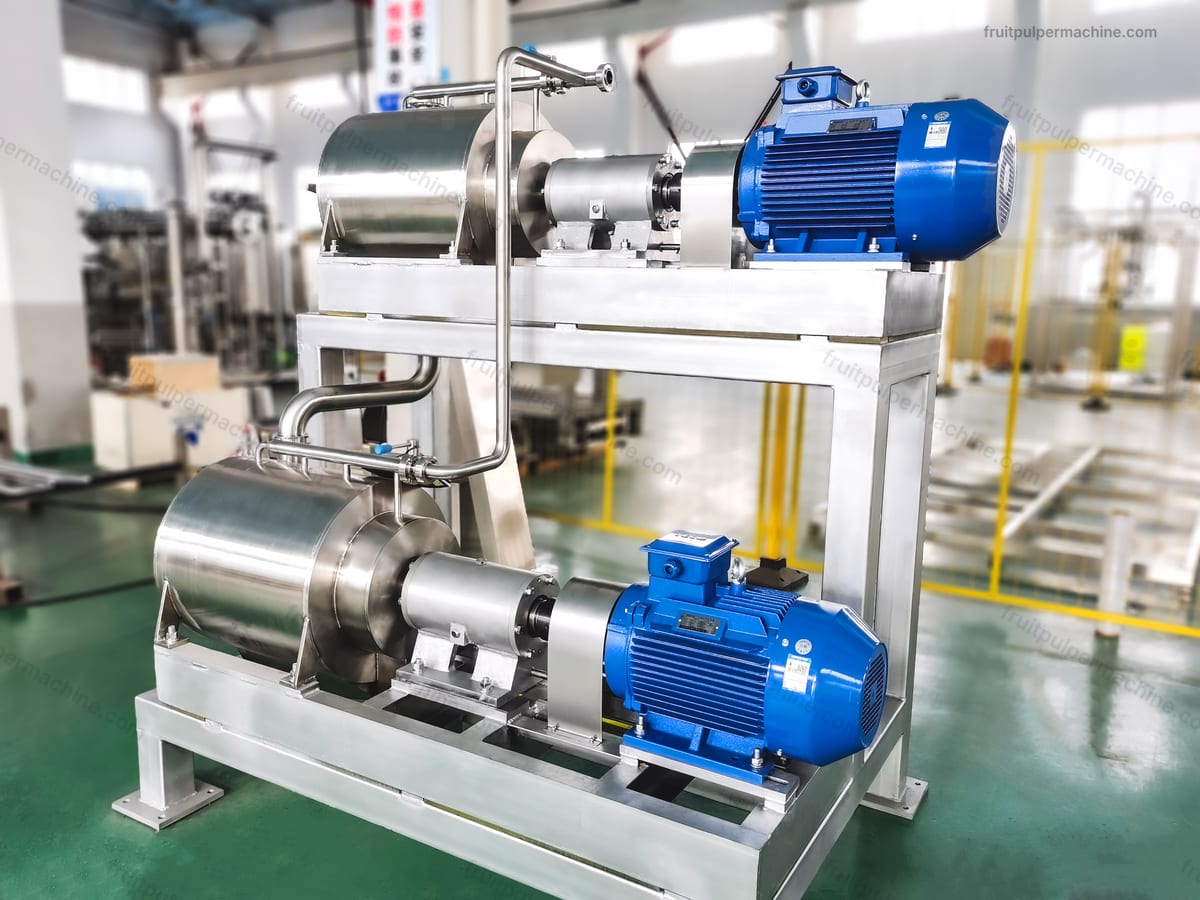
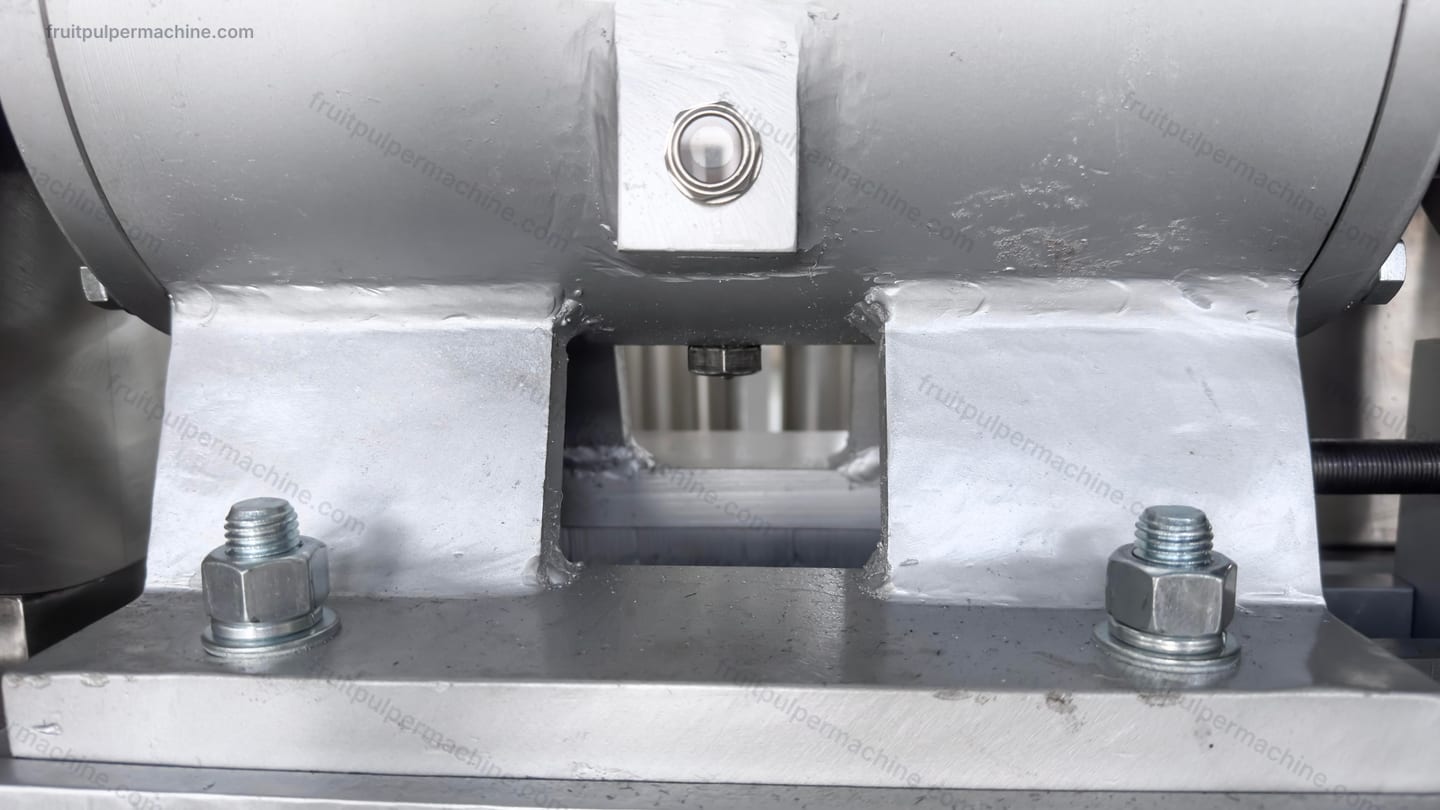
Trace common symptoms through causes and safe checks
Observed material movement or useful pulp output is lower than the established duty comparison.
Possible causes
- Fruit maturity, fibre, preparation or inlet presentation may differ from the material used to establish the earlier comparison. Bridging or irregular transfer may also make the apparent supply inconsistent.
- Screen loading, retained material behavior or the condition of common conveying and drive components may be restricting the intended path without proving a specific failure.
Checks
- Compare fruit identity, maturity, preparation and inlet presentation with the accepted material basis. Observe whether transfer remains steady and whether the pulp and reject streams change together before considering an operating response.
- After approved isolation, inspect the accessible screen, rotor or shaft, drive and discharge path within the authorized maintenance scope. Record evidence of loading, obstruction, looseness or wear for qualified review.
Limitation: Low output alone cannot identify a machine defect, establish rated capacity or justify copying settings from published research or another material.
Safety: Do not reach into the inlet, screen zone or discharge path. Pause and use the approved site isolation authority before any internal inspection.
The reject stream appears wetter or carries more usable pulp than the accepted comparison.
Possible causes
- A change in maturity, fibre, seed, peel or prepared particle condition may alter how material separates and how residue travels to discharge.
- The actual pass-and-retain behavior may no longer match the desired texture, or screen loading may be changing the available separation surface.
Checks
- Collect comparable pulp and reject observations from the same feed condition. Describe texture, visible inclusions and retained structures rather than relying on a broad yield impression.
- Review screen condition and the original separation target against the observed fruit structures. Treat operating variables as controlled comparison questions, not as instructions for an immediate unapproved change.
Limitation: Wet reject does not prove that a finer screen, a different speed or a component replacement will improve the application.
Safety: Keep sampling away from moving discharge parts and follow the approved collection method for hot, pressurized or otherwise hazardous surrounding processes.
Pulp texture is coarser or contains more visible retained structures than the written product acceptance allows.
Possible causes
- Fruit condition, seed, skin, peel or fibre behavior may differ from the sample used to define the screen duty and preparation boundary.
- Screen condition, assembly condition or an unintended material path may deserve inspection, but the symptom does not identify which condition is present.
Checks
- Compare the observed inclusions with the written pulp acceptance and with the reject from the same run. Confirm that preparation and fruit condition still represent the approved application basis.
- When authorized and safely isolated, examine accessible screen surfaces, seating and nearby flow paths for damage, loading or assembly concerns. Escalate findings rather than inferring a repair from texture alone.
Limitation: A coarse sample cannot establish a universal screen opening or demonstrate that the machine is unsuitable for the fruit.
Safety: Stop production review if hard fragments or suspected component damage could affect product safety, then place the disposition with the responsible site team.
Material accumulates on the screen or separation behavior drifts as the observed duty continues.
Possible causes
- Prepared pieces, peel, fibre, seeds or sticky material may be presenting a different retention challenge from the accepted trial basis.
- Screen condition, cleaning access or retained soil may require review, while the visible accumulation alone cannot distinguish process loading from maintenance condition.
Checks
- Relate the onset of loading to fruit condition, preparation, pulp texture and reject character. Preserve samples and observations before changing the application basis.
- After approved shutdown and isolation, inspect accessible screen surfaces and cleaning access for retained material, damage or incomplete sanitary release. Use the site's verification method before return to food contact.
Limitation: Visible loading cannot by itself prescribe a cleaning chemistry, operating setting, screen geometry or service action.
Safety: Never clear material from a moving screen zone. Treat uncertain sanitary release or inaccessible residue as a stop-and-escalate condition.
New vibration, movement or noise appears outside the accepted operating observation.
Possible causes
- Irregular feed, retained hard material or an obstructed path may coincide with the symptom without proving the mechanical source.
- The screen, rotor or shaft, bearings, drive, fasteners or supporting arrangement may require inspection by qualified personnel.
Checks
- From the approved observation position, record when the signal begins, where it appears strongest and whether feed presentation changed. Avoid touching guards or structures to localize movement.
- Stop under site authority and transfer internal, alignment or component inspection to qualified personnel. Preserve notes on recent cleaning, assembly and material events for their review.
Limitation: Remote guidance cannot identify the source of vibration or authorize continued operation, adjustment, alignment or part replacement.
Safety: Treat unexpected movement, contact noise or guard concern as grounds to stop and secure the area under the site's approved procedure.
Product leakage, seal-area residue or retained soil is observed after operation or sanitation.
Possible causes
- Seal, joint, fastener or adjacent component condition may deserve inspection, but the location of visible residue may not reveal its origin.
- Cleaning access, disassembly state, drainage or verification coverage may leave product soil unresolved within the current sanitation procedure.
Checks
- Record where residue first appears, its relation to product-contact boundaries and whether it returns after an approved clean inspection. Keep product disposition separate from mechanical diagnosis.
- Under approved isolation and sanitation controls, inspect accessible seals, joints, fasteners and cleaning access points. Escalate inaccessible soil, repeated leakage or uncertain food-contact condition.
Limitation: The observation does not establish seal compatibility, cleaning effectiveness, repair scope or fitness to release affected product.
Safety: Pause use when leakage creates slip, contamination, electrical or pressure concerns, and follow site authority for area control and product disposition.
Keep the investigation ordered and reviewable
- Stabilize the comparison before interpreting a symptom. Name the fruit condition and preparation, then observe pulp and reject from the same duty. If the incoming material is not comparable, the correct conclusion may be that evidence is insufficient rather than that the machine changed.
- Make operating changes only through the authority and documented limits for the installed machine. Preserve the earlier observation and alter a controlled factor where the approved procedure permits. A published test variable explains what researchers compared; it does not become an operating instruction for this equipment.
- Keep equipment diagnosis, sanitary release and product disposition as distinct decisions. A maintenance observation may justify stopping and inspection without identifying the failed part. Likewise, clean appearance does not replace the facility's sanitation verification or authorize release when contamination remains possible.
Prepare a structured technical review
Send the material basis, preparation record, paired pulp and reject observations, symptom history and authorized inspection findings for a bounded review.