types · consideration
Compare Fruit Pulper Types by Separation Duty
Fruit pulper machine types are more useful when classified by how prepared fruit is moved, worked against a perforated screen, divided into pulp and reject streams, and arranged across separation stages. A type name begins the comparison; the material response, desired texture and screen duty complete it.
Classify the mechanism before comparing labels
A fruit pulper may move prepared fruit with a rotating screw or worm shaft, or may work the feed with a beater or paddle assembly. In either family, the useful comparison is the relationship between the moving element and the perforated screen. The moving element conveys, presses or beats the prepared fruit; the screen provides the opening through which suitable pulp and liquid can pass. Feeding, product collection and reject discharge then complete the functional path. These families describe mechanical principles rather than a fixed construction for every machine bearing the same label.
The type decision should be expressed as a stream-separation problem. Prepared fruit enters the working zone, the rotor action presents material to the screen, acceptable pulp and liquid cross the openings, and seeds, skins, pits or coarse residue leave by a separate reject path when the fruit and preparation allow that separation. A configuration is therefore not defined by rotor vocabulary alone. It must also be read through screen behavior, pulp collection and the route available for material that should remain outside the product stream.
Screen choice links the mechanism to the product objective. Desired pulp texture must be considered alongside the size and behavior of seeds, fibres, skins and other rejects. A finer or differently shaped separation duty cannot be judged in isolation from what must pass and what must leave. For this reason, type comparisons should state the prepared material, the intended pulp character and the expected reject rather than treating screw, paddle or stage count as a complete selection answer. No configuration name establishes a universal screen choice.
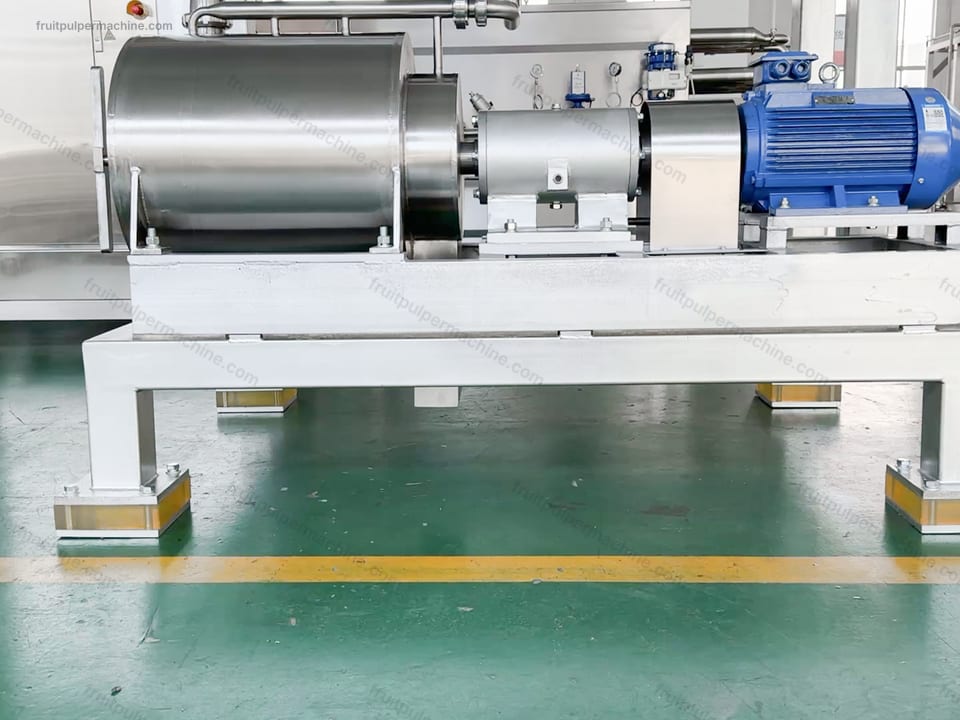
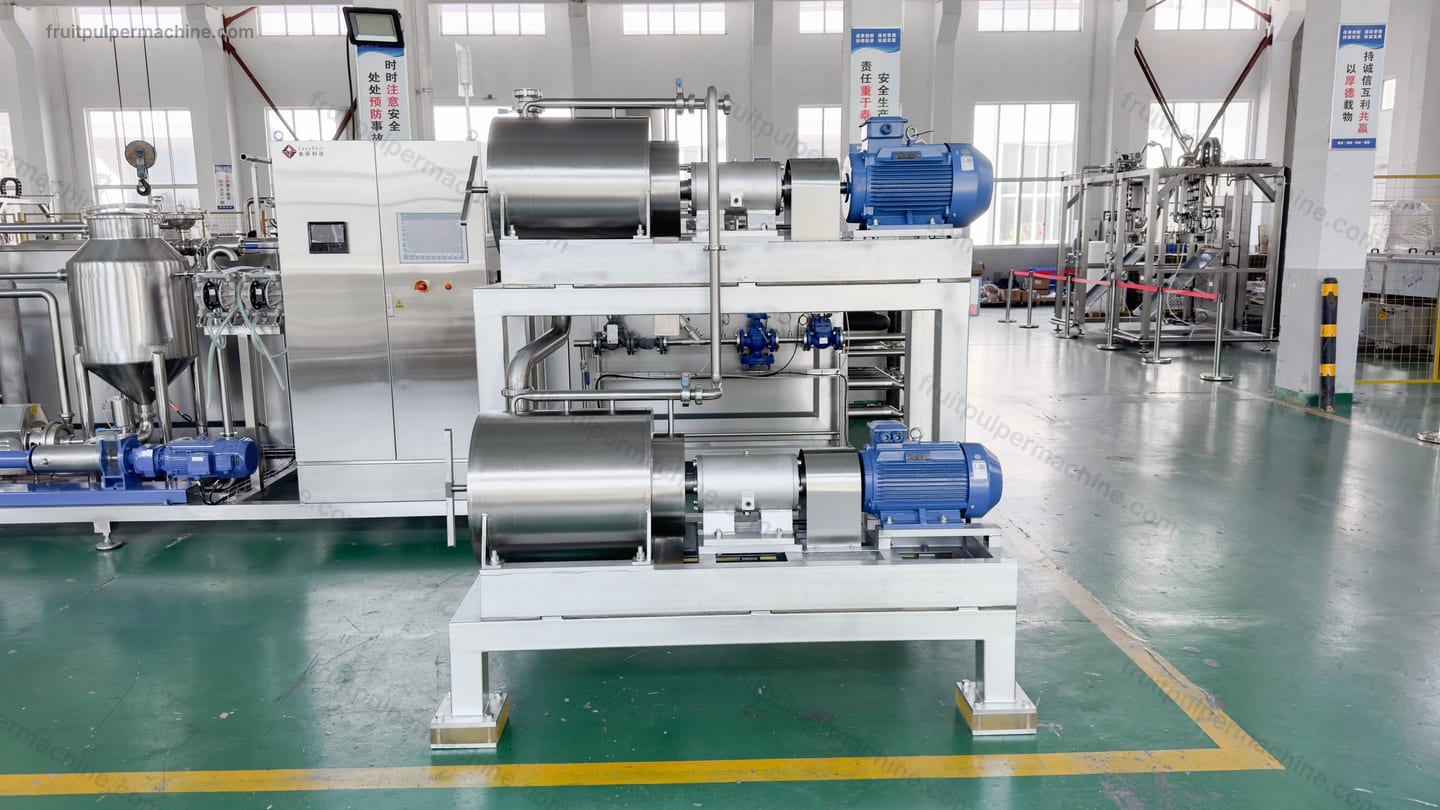
Compare pulper families through their working duty
| Topic | Working action | Material path | Screen and reject focus | Decision use |
|---|---|---|---|---|
| Screw or auger configuration | A rotating screw or worm shaft conveys prepared fruit and presses it toward a perforated screening surface. The geometry and motion must be understood for the particular design rather than inferred from the family name. | Feed movement is organized along the conveying element while screened pulp is collected separately from retained coarse material. The actual arrangement of inlet, screen, collection zone and discharge can differ among designs. | Review whether the intended pulp can cross the chosen openings while seeds, skins, pits, fibres or coarse residue follow the reject route. Preparation determines which components reach this working zone. | Use this family as a candidate when the evaluation needs a clearly described conveying and pressing action. Confirm suitability from material behavior and stream observations, not from the screw or auger term alone. |
| Beater or paddle configuration | A beater or paddle assembly works prepared fruit against a perforated screen. The terms identify a general beating action, while rotor form and movement remain specific to the configuration being evaluated. | The assembly distributes and works feed within the screening zone, with pulp collected after it passes the openings and retained material directed toward reject discharge. Component names do not fix their placement. | Compare how the screen duty relates to the desired pulp texture and to the observed size and behavior of seed, fibre, skin and other residue. Separation completeness must not be assumed. | Use this family to frame questions about beating action and presentation of feed to the screen. Judge the answer through prepared-fruit response, product stream character and reject stream character. |
| Single-stage configuration | Treat single-stage as proposal vocabulary until its author defines the term. Do not infer the number, order or connection of working elements from the label. Request a stage-by-stage diagram that identifies every feeding, conveying or beating, screening, pulp collection and reject discharge function included in the proposed boundary. | Ask the diagram to trace prepared feed to every disclosed pulp and reject outlet and to mark interfaces outside the stated boundary. The single-stage label alone does not establish a serial, parallel or recirculating path, and it does not identify a screw, worm, beater or paddle action. | For each screen actually shown, require a pass-and-retain statement tied to desired pulp texture and observed seed, fibre, skin, pit or coarse-residue behavior. If the proposal does not disclose a screen duty, record that as an unresolved clarification instead of supplying one by assumption. | Compare the disclosed functions and stream boundaries, not the single-stage wording. The term establishes neither output quality nor a particular topology. A reviewable proposal explains its moving action, screen role, pass stream, retained stream and external interfaces in its own diagram. |
| Double-stage configuration | Treat double-stage as an unverified proposal label rather than evidence of two serial separation duties. Request a stage-by-stage diagram and a definition of what the author counts as a stage. The diagram should identify the working action, screen role, collection function and reject function within every claimed boundary. | Require every inlet, outlet and interface to be traced without assuming that one claimed stage feeds another. The label does not reveal sequence, connection, recirculation, rotor geometry or preparation boundary. Those features remain unknown until the proposal depicts and explains them. | For every screen depicted, ask what material is intended to pass, what is intended to remain with reject and how that duty relates to the desired pulp texture. Separate statements are needed where the proposal claims distinct screen functions; stage count cannot supply those statements. | Use the double-stage term only as an index to clarification. Compare the documented functions, pass-and-retain duties and interfaces with the actual fruit and separation target. Do not infer added performance, serial flow or superiority from the count in the label. |
Read every type name through the screen and reject streams
- Conveying, pressing and beating describe how a moving element presents prepared fruit to a perforated screen. They do not, by themselves, define the complete feed route, pulp collection arrangement or reject discharge. Two machines using related vocabulary can therefore require separate functional descriptions before they are treated as comparable.
- A useful screen statement names both sides of the boundary: the pulp and liquid intended to pass, and the seed, skin, pit, fibre or coarse residue intended to remain with reject. The outcome also depends on fruit structure and preparation, so complete removal should not be promised from a type label.
- Stage count remains unverified proposal vocabulary until a stage-by-stage diagram defines it. Never infer sequence, topology, an additional screen or improved performance from single-stage or double-stage wording. Ask the proposal author to identify each working function, each disclosed screen, both sides of every pass-and-retain boundary and every interface between claimed stages.
- Screw, auger, beater, paddle and staged labels are classification aids. They do not establish a screen opening, separation result or offered-machine specification. A defensible comparison records what each term means in the proposed material path and keeps unknown geometry or motion outside the conclusion until the design is identified.
Build a mechanism comparison that can be reviewed
- Identify whether the described action primarily conveys and presses with a screw or worm, or works the feed with a beater or paddle. Then request the actual relationship between that moving element and the screen, because family language does not define rotor geometry for every design.
- Trace prepared feed through feeding, working action, screening, pulp collection and reject discharge. This reveals whether compared configurations describe the same functional boundary or merely use similar equipment names while arranging the material path differently.
- Write the desired pulp texture beside the seeds, fibres, skins, pits and coarse material expected in the feed. Describe which material should cross the screen and which should leave as reject, without turning that description into a universal opening recommendation.
- Request a stage-by-stage diagram for any proposal using single-stage or double-stage language. For each claimed stage, ask for the moving action, disclosed screen, intended pass stream, intended retained stream, pulp outlet, reject outlet and interface explanation. Do not infer serial flow or substitute the stage count for those disclosures.
Prepare a type comparison brief
Describe the prepared fruit, desired pulp texture, expected screen pass and reject material so candidate configurations can be compared on the same functional basis.