selection · consideration
Build a Defensible Fruit Pulper Selection Basis
Fruit pulper selection starts by defining the separation duty, not by choosing a model name or copying an operating value. The decision record must connect actual fruit condition, preparation, desired pulp, expected reject, screen strategy and production basis. Representative trials can then test the important uncertainties under controlled observations. Published study settings remain useful only as examples of variables researchers examined; they do not establish a transferable operating window. Final acceptance must be written against the project material and product objective before equipment comparison begins.
Define the duty before comparing equipment
The feed basis describes the fruit at the proposed pulper inlet. Record species, variety, maturity, fibre, peel, seeds, pits, free liquid and the preparation already applied. These features can change what reaches the screen and how pulp and reject appear. A broad fruit name cannot replace this description, and a production request cannot be interpreted consistently until the inlet condition is bounded. Seasonal or supplier variation that may change the separation task should remain visible as separate material conditions rather than being hidden inside an average description.
The product target should describe observable pulp character and the intended next use. State the desired texture, acceptable coarse inclusions and any downstream finishing assumption. Pair that statement with a separation target for the retained stream: name the seeds, skins, pits, fibres or other structures expected to leave as reject, and define how reject condition will be judged. Screen opening and geometry can then be discussed against both sides of the boundary. No screen label or fruit category supplies a universal answer without these paired targets.
A capacity discussion becomes comparable only when it names feed condition, preparation, target output and acceptable reject or loss criteria. The same requested rate can represent different duties when a proposal assumes softened material and another assumes a firmer prepared feed. Operating evidence also needs context. Feed rate, rotor speed and residence behaviour are relevant evaluation variables, but settings reported for a research prototype remain attached to its mechanism, fruit, preparation and method. Selection should therefore ask what was tested and observed before asking whether a value can inform the present duty.
A representative material trial reduces ambiguity when the proposed feed or texture differs from earlier applications. The trial should preserve sample identity, preparation, screen concept, deliberate operating changes and paired observations of pulp and reject. It is evidence for a selection decision, not a substitute for written acceptance criteria. Before comparison closes, define which observations will constitute an acceptable result, which material conditions they apply to and which uncertainties still require project-specific confirmation.
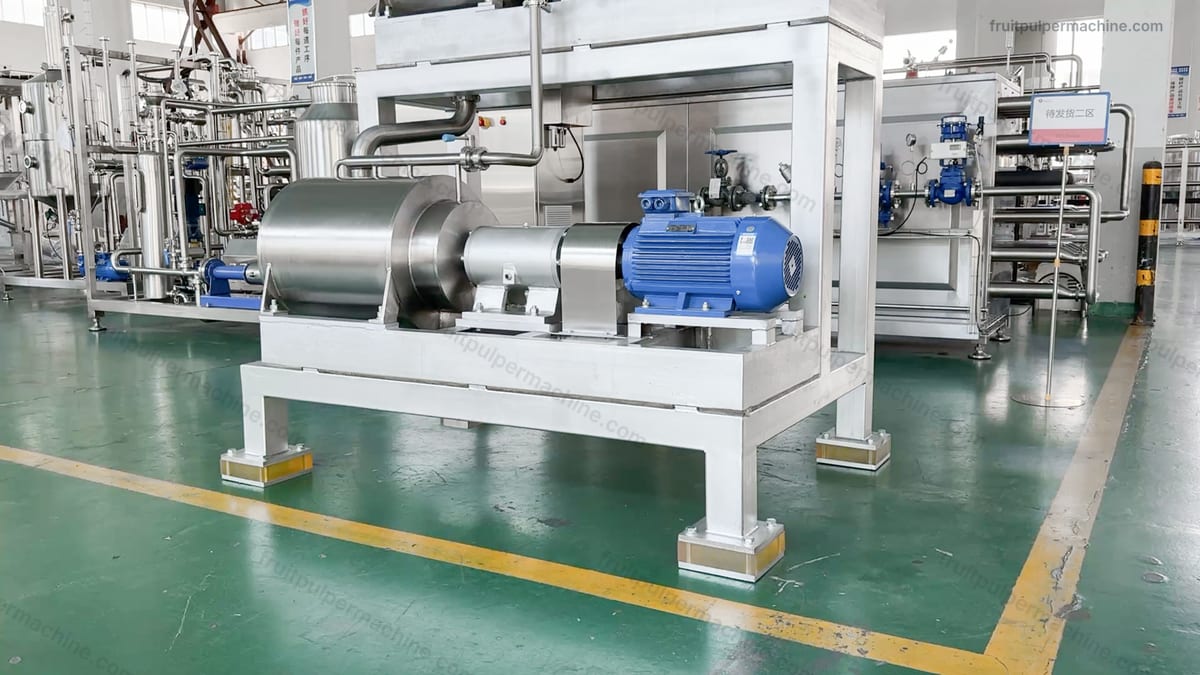
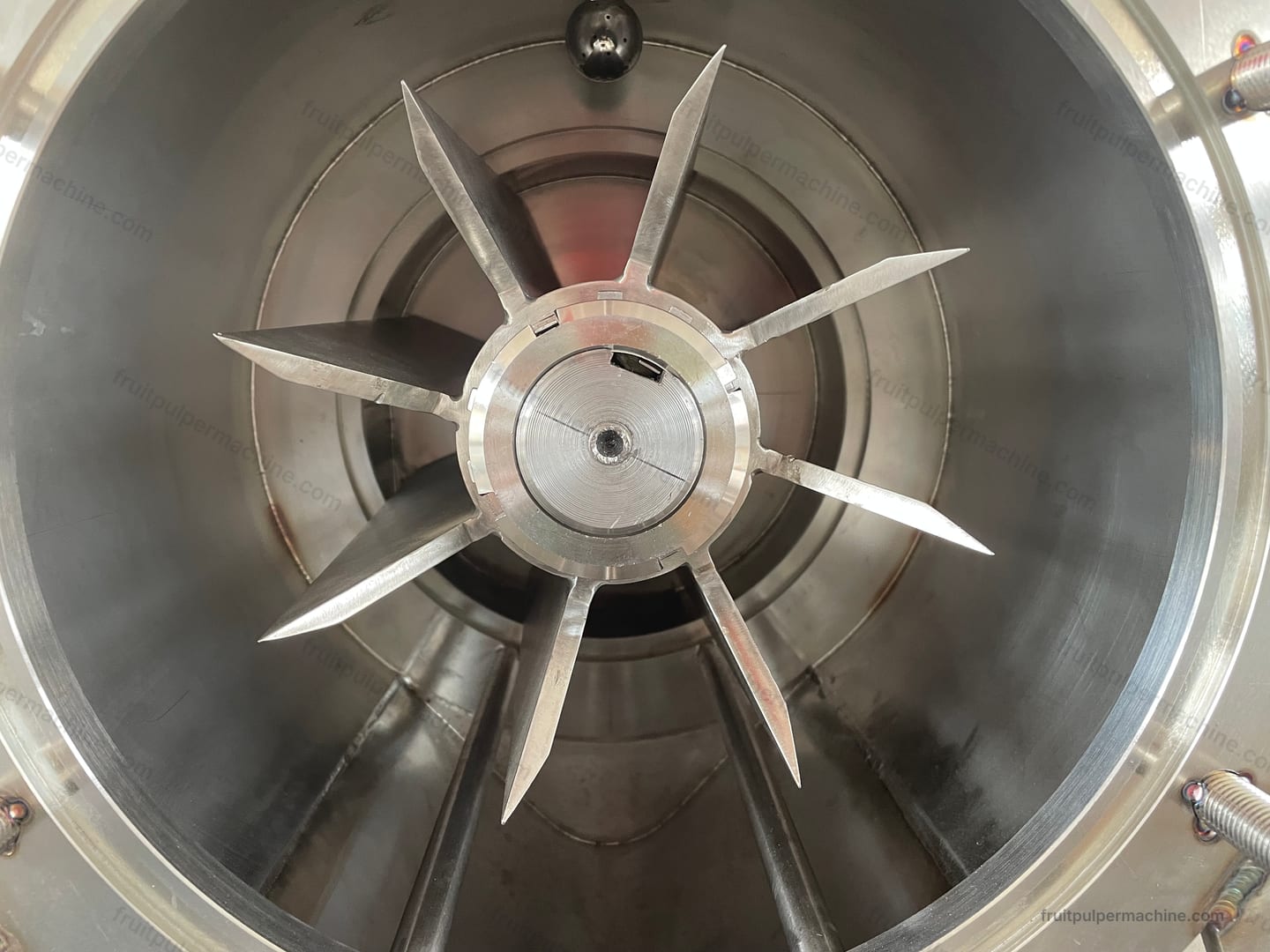
Complete the technical selection worksheet
- Describe each representative fruit condition at the pulper inlet. Include variety, maturity, peel, fibre, seed or pit character, preparation state and meaningful variability. Keep unlike material conditions separate so a later result can be traced to the feed that produced it.
- Write the desired pulp as an observable product target. Define texture, permitted coarse matter and the downstream use that gives those observations meaning. Avoid relying on terms such as puree, juice or pulp without a description that a trial team can apply consistently.
- Name what should pass and what should remain with reject. Relate screen strategy to the desired texture and to the observed size and behaviour of seeds, skins, pits, fibres and coarse residue. Record uncertainty rather than assigning every component to an outlet by assumption.
- Connect the requested production duty to the described feed and preparation. State the target output basis together with acceptable reject or loss criteria. This prevents an isolated throughput statement from being treated as comparable when material and outlet assumptions differ.
- Treat the screen as a separation decision rather than a catalogue option. Explain which pulp texture and retained structures the proposed opening and geometry are intended to address. Where material behaviour is uncertain, identify screen concepts for trial comparison without presenting a universal opening recommendation.
- Select material that represents the conditions expected in use and preserve its identity through preparation and testing. Define deliberate trial changes, observation points and sample handling before the run. Compare pulp and reject from the same condition so the evidence remains interpretable.
- State acceptance criteria before treating a trial as a selection result. Tie each criterion to the represented feed, preparation, product target, reject expectation and observation method. Mark any unresolved condition as a follow-up requirement rather than widening a bounded result into a general promise.
Separate useful evidence from unsupported transfer
| Topic | Decision input | Defensible use | Transfer limit |
|---|---|---|---|
| Representative feed description | Observed fruit condition and the actual preparation presented to the proposed separation duty | Defines which material a screen concept, trial result and acceptance statement are intended to cover | A conclusion should be reviewed when variety, maturity, fibre, peel, seed, pit or preparation behaviour changes |
| Published operating example | A documented variable and observation from a named research mechanism, fruit and experimental method | Shows which operating questions researchers examined and which contextual limitations need attention | Does not create a recommended setting, commercial capacity or operating window for an unspecified machine |
| Screen concept | Proposed opening and geometry linked to desired texture and observed reject structures | Creates a specific pass-and-retain question that can be examined with representative material | Cannot be treated as universal across unlike fruit, preparation and product targets |
| Controlled material trial | Recorded feed, preparation, screen strategy, deliberate operating conditions and paired outlet observations | Reduces ambiguity and supports comparison against prewritten project acceptance criteria | Supports the tested boundary but does not replace contractual acceptance or validation for changed conditions |
Keep published settings within their study boundaries
| Published evidence record | Selection interpretation |
|---|---|
| Author-coded extraction-speed test levels | The registered record preserves discrete factor levels used with a cottage-industry mango extractor prototype. The paper shifts between motor, shaft and extraction-speed language and does not report a measurement method. Use the record to understand the experiment, not as a continuous range, preferred setting or transferable specification. Indicative planning range, not a guaranteed machine specification. Confirm by model selection and material trials. |
| Author-reported feed-factor test levels | The registered record comes from the same mango prototype experiment. Its procedure describes fruit portions but does not define dosing duration, timing or rate control. The levels explain an experimental factor only; they do not establish continuous throughput, equipment capacity, an optimum or a setting for other material. Indicative planning range, not a guaranteed machine specification. Confirm by model selection and material trials. |
| Fixed shaft operating condition | The registered record preserves a fixed condition reported for a separate small-scale mango extractor prototype. The study did not vary that condition, establish it as preferred or explain how it was measured and controlled. Keep it separate from the other experiment and use it only as context for trial questions. Indicative planning range, not a guaranteed machine specification. Confirm by model selection and material trials. |
Design a representative trial that can support selection
Freeze the material boundary
Identify the fruit lot, variation and preparation represented by each trial condition. Do not blend meaningfully different maturity, fibre, peel, seed or pit conditions into an unexplained sample. The record should make clear which future feed the observation is intended to represent.
Freeze pulp and reject targets
Write the desired pulp character and retained-material expectation before observing the trial. Link screen strategy to those targets so the team judges the same separation duty. Unwritten preferences discovered after the run should become a new criterion and review, not a silent reinterpretation.
Control the observation record
Keep feed condition, operating variables, pulp observations and reject observations connected. Change a variable deliberately and record the surrounding conditions that remain relevant. This allows the team to distinguish a material change from an operating change without turning a research example into a project instruction.
Compare the complete production basis
Interpret production evidence with the actual feed, preparation, product target and reject or loss criterion. A rate statement is useful only when those conditions are visible. If competing observations use different bases, keep them separate until a comparable duty can be tested.
Close the trial against written criteria
Compare the recorded result with the prewritten acceptance criteria and represented material boundary. Record accepted observations, failed observations and unresolved conditions. A trial can reduce uncertainty for selection, but final acceptance remains a separate written project requirement.
Preserve the reasoning behind the selection decision
- Keep an uncertainty register beside the selection worksheet. It should distinguish observed material behaviour from assumed behaviour and identify which questions need a representative trial. An unresolved fruit condition, screen response or reject expectation should remain visible during comparison instead of being converted into a default. Closing the decision means either resolving the uncertainty with relevant evidence or defining it as a project condition that still needs confirmation.
- Use the same duty statement when comparing candidate evidence. Feed condition, preparation, desired pulp, reject basis and observation language should not shift between proposals without an explicit review. If a candidate assumes a different inlet or product target, record that difference before interpreting capacity or trial information. This protects the comparison from appearing precise while each candidate is actually answering a different separation problem.
- Label every operating example by its evidence role. A published study can identify variables worth examining, while a project trial can show how represented material behaved under recorded conditions. Neither should quietly become a universal requirement. A project requirement must come from the defined duty and acceptance basis, with its scope stated clearly enough that later reviewers can see why the evidence was considered relevant.
- Hand the completed record forward without stripping away its boundaries. Include material descriptions, product and reject targets, screen questions, production basis, trial observations, acceptance criteria and remaining exclusions. This record supports later procurement work by defining what technical evidence a proposal must answer. It should not be replaced by a short model label that loses the assumptions on which the selection conclusion depends.
Convert the selection basis into a structured inquiry
Carry the defined feed, product target, reject expectation, screen questions, trial boundary and acceptance criteria into the project request.