hygienic design · consideration
Review Hygienic Fruit Pulper Design as a Complete Boundary
A hygienic design review begins with intended use and follows every place where product, residue and cleaning activity can interact with the equipment and its installation. The review must define the food-contact boundary, examine material compatibility, identify access and drainage questions, and connect equipment features with the site's sanitation and contamination-control system. Cleanability is not established by appearance or material name alone; it requires a planned method and verification against the actual soil and operating context. Design references guide this work but do not confer formal status on a machine or site.
Start with intended use and the real cleaning context
Intended use defines the material and sanitation conditions that the review must address. Describe the fruit, preparation state, expected soils, operating pattern, cleaning approach and surrounding process. A design that can be accessed under a stated use may still present a different review when product character, cleaning method or installation changes. The intended-use record should therefore identify assumptions and foreseeable variation instead of treating hygienic design as a general label detached from the actual duty.
The food-contact boundary includes the surfaces that product reaches during normal movement and the interfaces where product or residue can migrate. Trace the feed path, working zone, screen, pulp collection path and reject path, then review joints, seals, access closures and transfer interfaces within that boundary. Areas outside direct contact can still affect sanitation when their position or condition allows contamination to reach the product zone. The boundary should be shown on a drawing and confirmed during physical review rather than inferred from an equipment outline.
Material review should cover every product-contact component and the construction details that determine how it can be cleaned and maintained. Evaluate suitability for the intended food, expected corrosion conditions and planned cleaning method. Include screens, moving elements, housings, fasteners, seals and joining regions within the declared boundary. A material designation alone does not answer whether the finished component, surface condition, joint or interface remains suitable throughout the intended duty.
Equipment sanitation belongs inside the facility's broader contamination-control and food-safety system. Installation, operation, maintenance, cleaning, inspection and handling of removed parts all influence whether the planned hygienic features can be used effectively. The review should assign responsibilities and interfaces without implying that an equipment feature establishes finished-product safety. Site procedures, hazard assessment and verification remain necessary around the machine-specific design review.
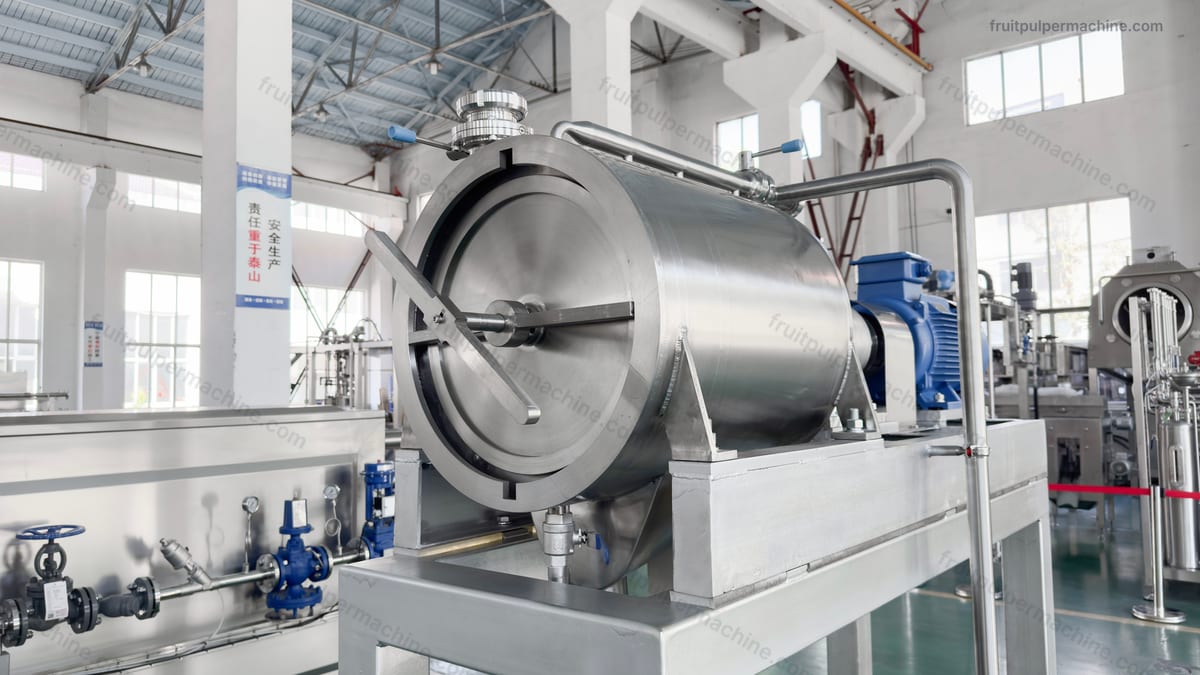
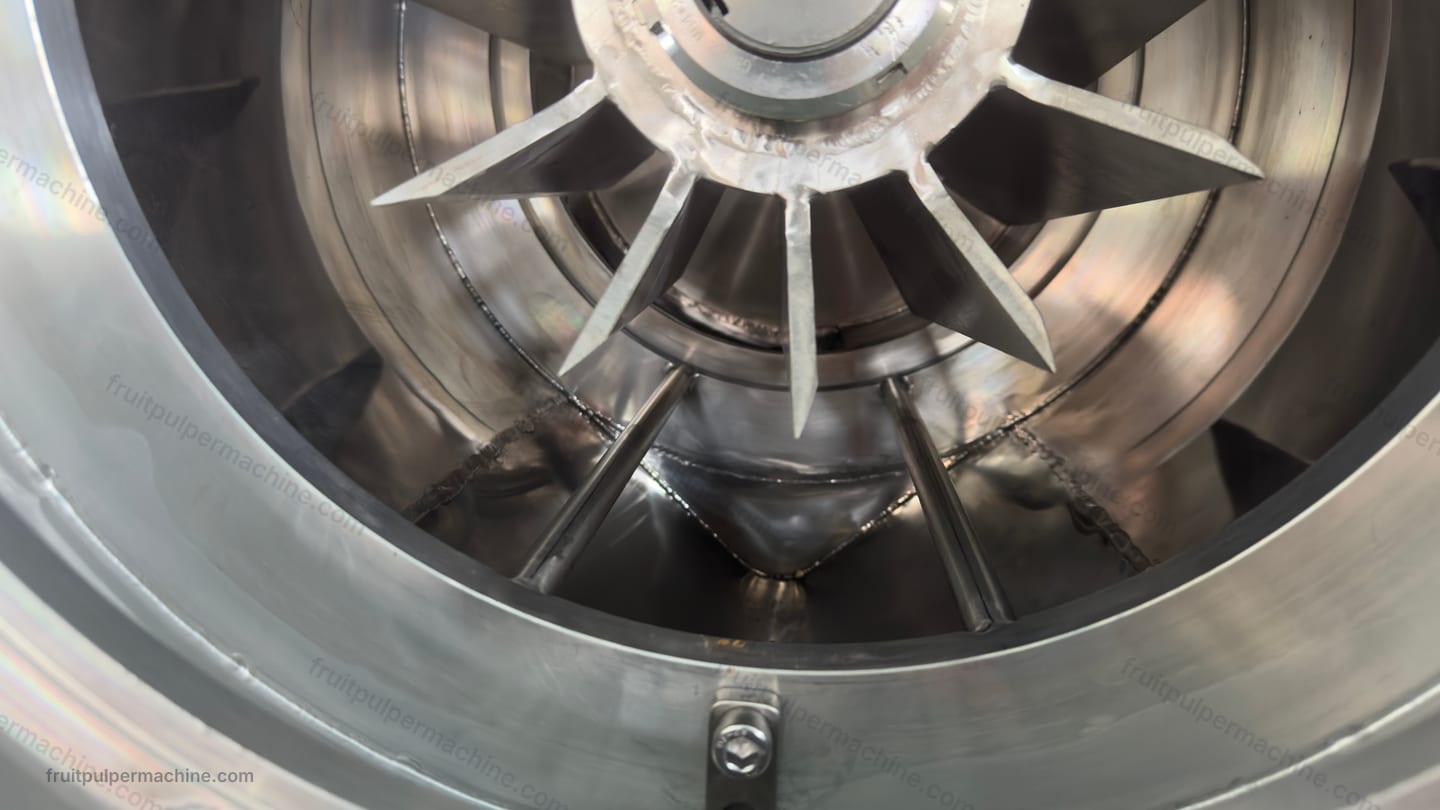
Complete the hygienic design review checklist
- Document product characteristics, expected soil, operating context, cleaning approach and surrounding process. Identify which assumptions are fixed and which may vary. Use that intended-use statement as the boundary for every later material, access and verification decision.
- Mark the complete product path and the surfaces, joints, seals, closures and transfer interfaces within it. Review adjacent areas that could introduce contamination into the product zone. Resolve uncertain boundaries on drawings and during equipment inspection rather than leaving them implicit.
- For each food-contact component, record the material and construction evidence relevant to intended food contact, cleanability, corrosion conditions and the planned cleaning method. Include screens, moving elements, housings, fasteners, seals and joints without treating a broad material family as a complete conclusion.
- Trace how the planned method reaches, cleans, inspects and releases every product-contact area. Record which parts remain assembled, which require removal and how removed parts are protected and handled. Areas that cannot be observed directly need a defined verification approach rather than an assumption of cleanliness.
- Observe where product, rinse liquid and loosened soil can collect during operation and sanitation. Review the equipment position, internal paths, outlets and surrounding installation for retention points. The objective is to identify conditions requiring design clarification or verification, not to prescribe a universal slope or drainage arrangement.
- Check whether supports, connections, guards, nearby equipment and the room arrangement preserve access for cleaning, inspection and maintenance. A cleanable component can become difficult to service after installation. Record the site interfaces that must remain open or removable for the intended sanitation method.
- Define how the site will verify that the planned procedure addresses the actual soil and declared contact boundary. The record should connect cleaning actions, inspection access, evidence of release and response to an unacceptable observation. Equipment design supports this work but cannot replace the site procedure or its verification.
- Treat hygienic design principles as review inputs rather than proof of formal equipment status. For any status statement, identify the exact scheme, equipment identity, configuration and scope, then require evidence that addresses those particulars. Do not extend a general reference or component document to the complete installation by assumption.
Review each boundary through evidence and verification
| Topic | Review boundary | Evidence question | Verification focus |
|---|---|---|---|
| Product-contact surfaces | Every surface and interface reached by product or capable of affecting the declared product path | Does the construction support access, cleaning and sanitary maintenance for the intended use | Confirm the mapped boundary against drawings, physical access and the planned sanitation method |
| Materials and construction | Contact components, surfaces, joints, fasteners and seals within the intended food and cleaning environment | Is compatibility addressed for food contact, cleanability, corrosion conditions and the proposed cleaning approach | Review component-specific evidence and inspect the finished interfaces rather than relying on a material name alone |
| Access and disassembly | Working chamber, screen region, pulp path, reject path and removable parts used during sanitation | Can the declared procedure reach and inspect each area while keeping removed parts controlled | Walk through the planned access sequence and identify areas that need indirect verification |
| Drainage and retention | Internal paths, outlets, equipment position and nearby installation areas where liquid or soil may remain | Does the intended method remove product and cleaning residues from the reviewed boundary | Observe retention after the proposed sequence and record any design or procedural dependency |
| Installation and sanitation system | Equipment layout, connections, surroundings, site procedures and contamination-control responsibilities | Do installation and operating arrangements preserve the access and controls assumed by the hygienic review | Confirm responsibilities, interfaces and release evidence within the facility's broader food-safety system |
Turn design review into a sanitation verification plan
Declare intended use and contact boundaries
Begin with the product, soil, operating context and planned sanitation approach. Mark the product-contact path and adjacent contamination routes. This creates a review boundary that can be challenged against the actual equipment and installation rather than a generic hygienic description.
Trace access, cleaning and drainage
Follow the planned method through every declared area. Record how cleaning reaches the surface, how soil and liquid leave, which parts require removal and which areas cannot be inspected directly. Keep design dependencies and procedural dependencies distinct so neither is mistaken for the other.
Challenge material and construction assumptions
Compare component evidence with the intended food, corrosion environment and cleaning method. Inspect the finished construction and interfaces that may influence cleanability. Record unsupported assumptions about contact materials, seals, joints or surface condition for resolution before the review closes.
Verify the planned method against actual soil
Use a site-defined procedure and evidence method that reflect the product and soil described in intended use. Confirm that inspection and release evidence cover the declared boundary. If an area cannot be verified, return that gap to design, access or procedural review instead of assuming a satisfactory result.
Review changes against the same boundary
Reopen the review when product, cleaning method, contact components, access arrangement or installation context changes. Determine whether the earlier evidence still addresses the intended use and contamination-control system. A design conclusion should travel only as far as the conditions that were actually reviewed and verified.
Close the review without losing its conditions
- A smooth appearance, familiar material name or open cover does not by itself establish cleanability. The conclusion needs intended-use context, access evidence, a planned sanitation method and verification against the relevant soil and contact boundary.
- Installation can preserve or obstruct the access assumed during equipment review. Connections, supports, guards, adjacent equipment and room layout should therefore be included before the hygienic boundary is accepted for site use.
- Cleaning effectiveness depends on the site's product soil, procedure, access and evidence method. General design principles can guide the questions, but the facility must define and verify the sanitation approach for its actual operating context.
- Formal equipment status has its own identity and scope. A review should keep principle-based observations separate from any scheme-specific documentation, and it should never extend evidence from a different configuration, component or installation without support.
Carry the hygienic boundary into installation and change review
The equipment review should produce an installation handover that identifies the access, removal paths, drainage observations and surrounding clearances on which the sanitation approach depends. Connections and nearby structures should be checked against that handover before the boundary is accepted at the site. If the installed arrangement prevents inspection or part handling that the design review assumed, the hygienic conclusion needs revision rather than a note that the component appeared accessible before installation.
The sanitation record should connect intended soil, the planned method, access to the declared contact boundary, inspection evidence and release responsibility. This evidence chain makes clear what was examined and how an unacceptable observation returns to cleaning, access or design review. It also prevents a successful observation at an easy-to-see surface from being treated as evidence for hidden or differently constructed areas that require their own verification approach.
Change review should cover replacement contact parts, revised seals or joints, altered cleaning methods, new product soils and installation changes that affect access or retention. Compare the changed condition with the original intended-use and material evidence instead of assuming equivalence from a similar description. Record whether the sanitation verification still reaches the relevant boundary and whether the broader contamination-control system needs a corresponding update.
Prepare the hygienic design review boundary
Carry intended use, contact surfaces, material evidence, access, drainage, installation and sanitation verification questions into the technical request.