process flow · consideration
Fruit Pulp Processing Flow from Intake to Filling
A useful fruit pulp flow follows material transformation rather than a catalogue of machines. It starts with the incoming fruit condition, places sorting, washing and preparation before pulping, defines where pulp and reject streams separate, and then selects finishing, preservation and filling branches around the intended product. Each branch needs a stated decision reason and a destination for material that does not continue as product.
Build the route around material state
A process flow is a map of what must happen to the fruit and in which order. It identifies the condition entering a stage, the change expected within that stage, and the condition required before material may continue. That framing prevents a drawing from becoming a loose list of equipment. It also makes branch points visible when a target product needs finishing, blending, heating, another preservation approach or direct movement toward filling.
The route begins with an explicit description of the fruit. Species, variety, maturity, fibre, seeds, pits and peel can alter preparation needs and the character of both useful pulp and separated reject. Receiving notes should therefore describe what arrives rather than assume that a fruit name defines a stable feed. Sorting, washing and fruit-specific preparation can then be positioned before pulping with a clear reason for each operation.
The desired product determines what should happen after pulping. A coarse pulp, a refined base, a juice-oriented stream or an ingredient prepared for later processing may require different finishing and preservation branches. The flow should name the required intermediate condition before selecting a downstream operation. This keeps heating, concentration, blending, preservation and filling in a product-specific sequence instead of treating them as universal companions to every pulper.
Process flow and equipment integration answer related but different questions. The flow defines transformations, branch logic and stream destinations. An integration plan later defines physical handovers between preparation, transfer, pulping, finishing and reject handling. Keeping those documents distinct allows the process sequence to remain valid while interface details are still being evaluated. A generic route is therefore a decision framework, not a final equipment arrangement or piping instruction.
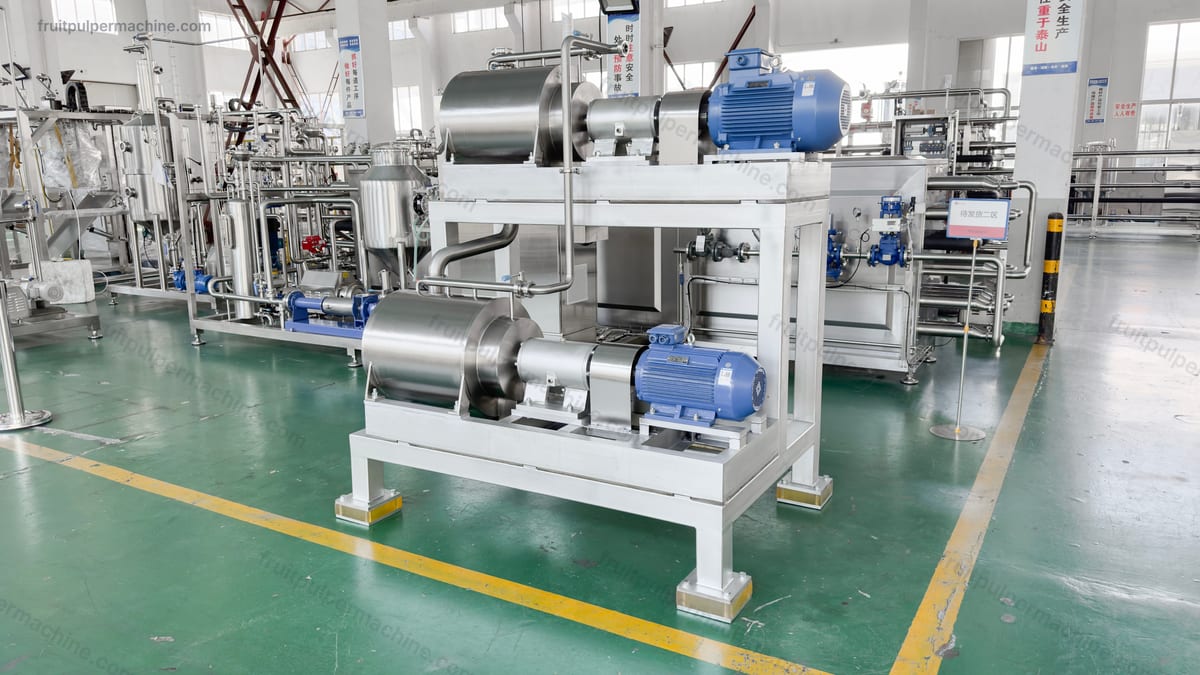
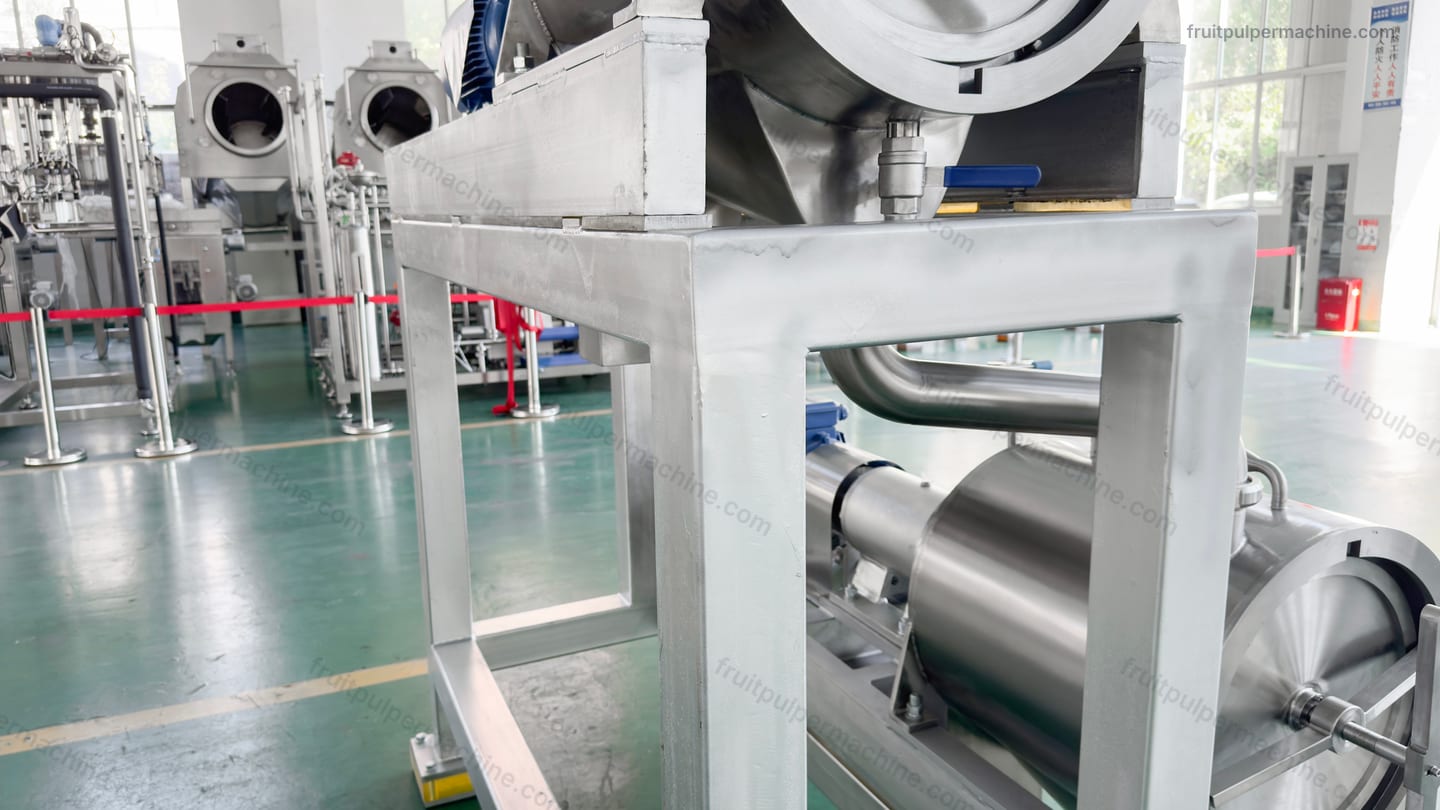
Trace each transformation and branch
Sort against receiving criteria
Sorting establishes which fruit enters the product route and which material leaves before washing. The decision basis may include condition, maturity, visible damage, foreign material and fruit-specific features that affect later preparation. Record the disposition of excluded material rather than drawing one undifferentiated waste arrow. Sorting information also reveals variation that may influence pulping behaviour, so the flow should carry relevant observations forward to the preparation and separation decisions.
Wash before mechanical preparation
Washing belongs upstream of pulping so avoidable contamination and unsuitable carryover are not intentionally introduced into the separator. The flow should state the purpose of washing, identify what condition must be reached before preparation, and show where removed soil or other wash-related material goes. Exact controls depend on the product and hazard assessment, so a generic diagram should mark the decision boundary without inventing a universal washing procedure.
Prepare for the fruit structure
Preparation converts received fruit into a condition suitable for the planned separation duty. Depending on fruit structure, the route may need cutting, crushing, softening or another fruit-specific operation before pulping. The selected action should respond to peel, fibre, pits, seeds and maturity rather than habit. Show which parts remain with the feed, which leave during preparation, and what condition signals readiness for the pulping stage.
Define the pulping separation duty
Pulping is the central separation point in this route, but its duty must be written in product terms. Describe the prepared feed, the useful pulp condition expected to continue, and the seeds, peel, fibre or other coarse material expected in the reject branch. Fruit condition can change both outlets, so the flow should not imply complete separation. It should instead establish what the next stage needs and how each outlet will be observed and directed.
Finish only to the required product condition
Finishing is a downstream choice rather than an automatic repeat of pulping. Use it when the intended product needs another refinement decision after the main pulp and reject split. The flow should define the incoming pulp, the desired change, any additional separated material and the release condition for the following branch. If finishing is unnecessary, the route should bypass it explicitly instead of leaving an ambiguous placeholder.
Choose a heat or preservation branch
After the required pulp condition is established, select the downstream branch around the actual product objective. Heating, blending, concentration or another preservation operation may be relevant, but no generic flow can decide that combination for every product. Mark the condition entering the branch, the transformation required before filling, and any hold or diversion decision that prevents unfinished material from being treated as ready product.
Release the defined product to filling
Filling closes the illustrated route only after the preceding product condition has been defined. The flow should show which stream reaches filling, which preservation branch it has followed, and what happens when the required condition is not met. This is a sequencing decision, not a package or line specification. Physical transfer, buffering and connection details belong to the later integration work once the product route is stable.
Keep decision gates visible
- A fruit name is not a complete flow input. Record maturity, peel, fibre, seeds, pits and relevant incoming variation before choosing preparation and separation branches.
- Release material from preparation only when its condition suits the defined pulping duty. The release description should connect upstream work with the expected pulp and reject streams.
- Choose finishing and preservation branches from the intended product condition. A branch that has no stated product purpose should not appear merely because it is familiar.
- Give every separated stream a named disposition. Sorting exclusions, preparation remnants, pulper reject and finishing reject are different decisions even when a simple diagram draws them near one another.
- Freeze the transformation sequence before resolving detailed interfaces. That order prevents transfer or connection assumptions from quietly changing the product route.
Separate sequence decisions from interface decisions
| Topic | Decision lens | Process flow record | Later integration record |
|---|---|---|---|
| Material state | What must change before the material continues | Incoming condition, intended transformation and release condition | Feed and discharge interface needed to preserve that sequence |
| Branch logic | Why product or reject follows a particular route | Product objective, separation outcome and stream disposition | Transfer path and handover between the selected operations |
| Drawing boundary | Which detail is settled at the current review stage | Ordered operations and conditional product branches | Physical connections, surrounding equipment and interface definition |
Review the route before interface design
- Describe the incoming fruit condition and the observations that affect sorting, washing, preparation, pulp character and reject character.
- Write a release condition for preparation, pulping, optional finishing, preservation and filling so each handover has a process reason.
- Map each reject origin and destination separately, including material excluded during sorting, preparation, pulping and any downstream refinement.
- State the product objective behind every finishing, blending, heating, concentration, preservation or filling branch, and remove operations that lack a defined duty.
Record enough context to defend every branch
Write each operation as an entry state, a transformation and an exit state. For sorting, the entry state is received fruit and the exit state is fruit accepted for washing. For preparation, the exit state is feed suitable for the defined pulping duty. Downstream descriptions should use the same discipline. This vocabulary exposes gaps where a drawing shows movement but never states what changed or why the next operation can accept the material.
Carry relevant fruit observations through the route instead of recording them only at intake. A change in maturity, peel, fibre, seeds or pits can alter preparation and the pulp or reject character observed later. The process record should identify which branch decision may need review when incoming condition changes. That trace keeps a material difference from being mistaken for an equipment-interface problem during later planning.
Label optional operations with a condition rather than a vague dashed line. A finishing branch should say which product characteristic requires further refinement. A heating, concentration, blending or preservation branch should say which intended product condition it creates before filling. If the condition is absent, the flow can show a deliberate bypass. Conditional wording makes the route adaptable without suggesting that every listed operation belongs in every product path.
Keep product, intermediate and reject stream identities stable from one operation to the next. A pulper outlet intended for further finishing is an intermediate stream, not yet the filled product. A peel-rich reject is not automatically equivalent to material excluded during sorting. Distinct names make dispositions reviewable and help later interface work preserve the intended separation rather than reconnecting streams because their destinations were left undefined.
When the process sequence is ready for integration review, hand over more than a diagram. Include incoming conditions, required intermediate states, branch reasons, continuing product destinations and reject destinations. Identify which stages are mandatory for the target product and which remain conditional. The integration review can then concentrate on preparation, transfer, pulping, finishing and reject interfaces without reopening assumptions that belong to product definition.
Revisit the route when the fruit condition or target product changes. A different preparation need can alter the feed presented to pulping, while a different product condition can add, remove or redirect finishing and preservation branches. Review the resulting pulp and reject destinations before revising physical interfaces. This order treats the process flow as a controlled decision record while avoiding the false impression that one generic route remains suitable for every fruit and product.
Close every branch with a destination and a return question for review. A continuing product stream should reach the next defined transformation or the filling release point. A reject stream should reach its stated handling boundary. A conditional branch should show where material goes when its trigger is not satisfied. This closure check often reveals hidden assumptions between finishing, preservation and filling, while also giving the integration plan a clear set of handovers to resolve without changing process intent.
Prepare a process-flow brief
Organize the incoming fruit condition, target product, required separation, downstream preservation branch and reject destinations for technical review.