integration · evaluation
Fruit Pulper Line Integration through Defined Interfaces
Line integration turns an approved process sequence into a set of controlled handovers around the pulper. The work defines what arrives from preparation, how feed reaches the machine, where pulp and reject leave, and what surrounding operations must accept. It also records control, utility, access and ownership boundaries. This page addresses interfaces, not the transformation order covered by the process-flow guide, and it does not provide a final process design, piping drawing, site layout or performance commitment.
Treat the pulper as a set of project handovers
An integration record begins after the intended product route and major material transformations are understood. Its purpose is to describe the boundary between the pulper and every surrounding function that must present, receive, control or support material. The record should name the information supplied by each party, the condition expected at the handover and the open decision that prevents the connection from being treated as complete. This approach keeps a generic equipment discussion useful without pretending that a preliminary interface list is a finished line design.
The upstream boundary starts with sorting, washing and fruit-specific preparation because the pulper should not be asked to correct unsuitable feed or avoidable contamination. Integration review does not create the product and hazard controls for those operations. It asks whether the preparation area can deliver the intended fruit condition consistently, whether foreign or excluded material has a separate route, and whether the transfer arrangement preserves the condition approved for pulping. Any unresolved preparation assumption remains an interface action rather than an equipment promise.
The pulper creates related pulp and reject handovers that must be reviewed together. The pulp route needs a receiving destination suited to the intended intermediate product, while the reject route needs collection, removal and disposition that cannot interfere with product movement or access. Neither outlet should be described as a free discharge with an unknown destination. Fruit structure and preparation can alter the character of both streams, so the interface record should capture assumptions and observation responsibilities without asserting separation performance.
Downstream interfaces depend on the target product. Pulp may move toward finishing, blending, heating, concentration, preservation or filling, but the integration record should not turn those possibilities into a universal sequence. It should identify the selected receiving function, the product condition expected at transfer, the handling response when that condition is not accepted and the owner of the connection. Thermal and filling interfaces remain conditional until the product route, sanitation concept and surrounding equipment responsibilities are confirmed.
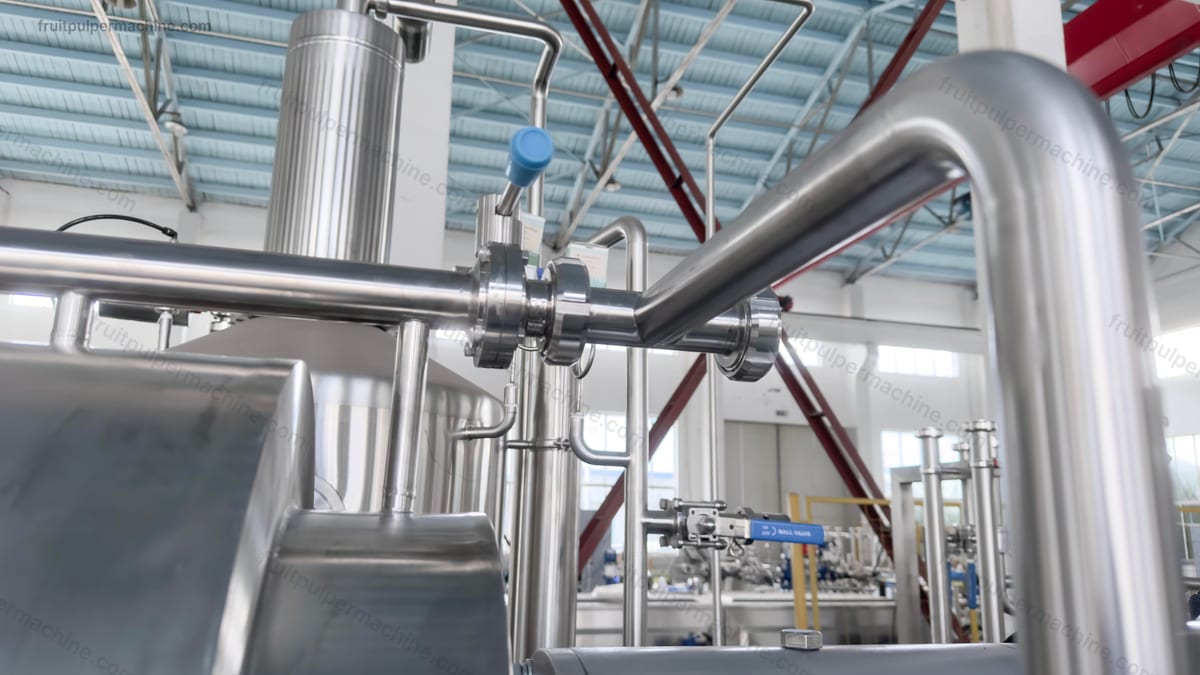
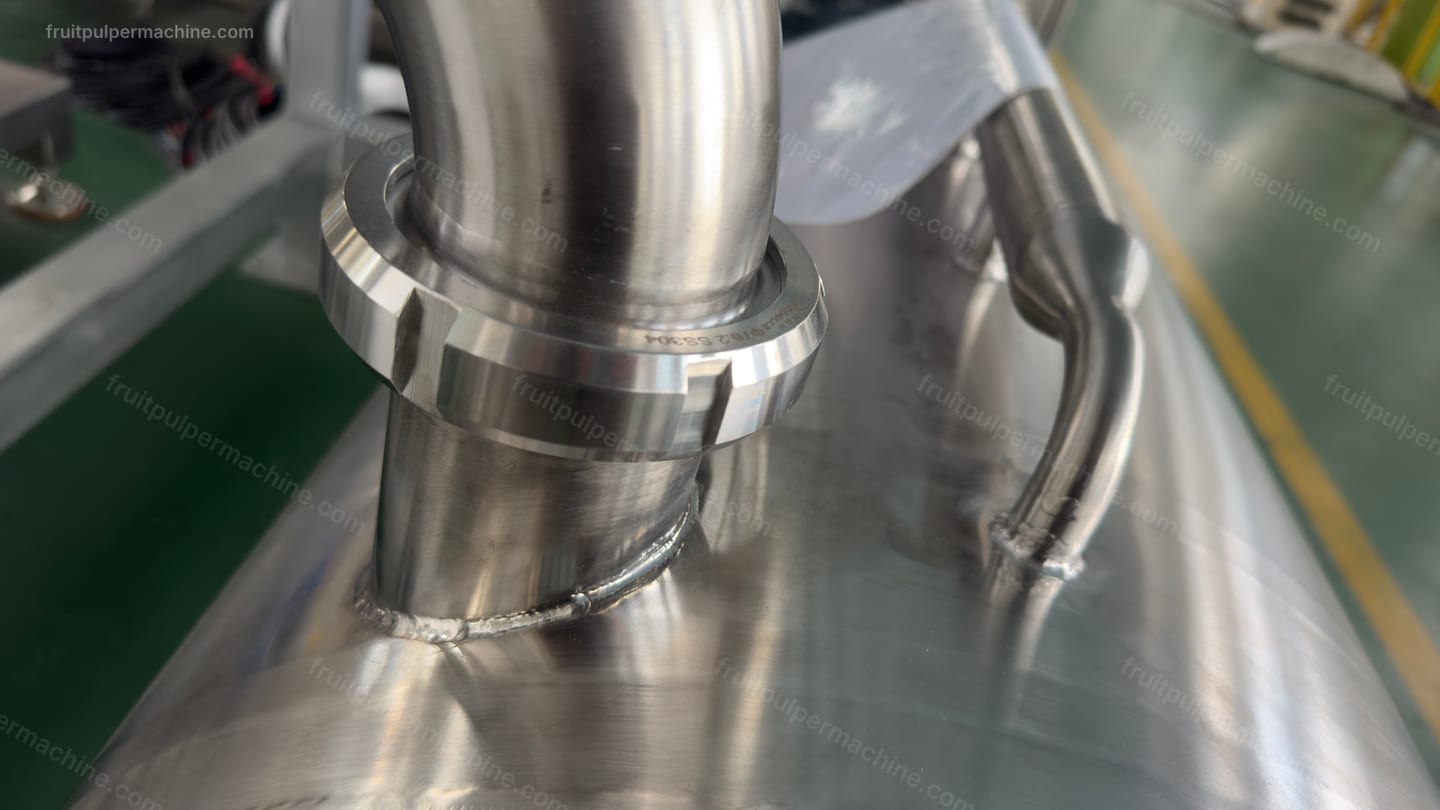
Record the boundary, required input and owner
| Topic | Interface boundary | Definition to resolve | Ownership record |
|---|---|---|---|
| Preparation release | Prepared fruit leaving the approved upstream operations | Fruit condition, excluded material route, sanitation boundary and acceptance information needed before transfer | Party confirming preparation suitability and communicating material variation to the pulper interface |
| Feed transfer | Handover from preparation discharge to the pulper inlet | Transfer method, buffering intent, containment, drainability, access and response to interrupted movement | Party coordinating surrounding transfer equipment with the disclosed pulper inlet and operating boundary |
| Pulp discharge | Useful intermediate leaving the separation zone | Receiving destination, containment, collection approach, sanitation continuity and response when downstream acceptance is unavailable | Party verifying that the receiving equipment and transfer path match the intended intermediate condition |
| Reject discharge | Retained peel, seeds, pits, fibre or coarse residue leaving the pulper | Collection, containment, removal, sanitation access and disposition without reconnecting reject to product handling | Party responsible for downstream reject handling and for keeping its destination available during operation |
| Finishing handover | Pulp moving to further refinement when the product route requires it | Required incoming product condition, additional reject destination, bypass intent and sanitation boundary | Party confirming the finishing duty and the compatibility of its receiving connection |
| Thermal and filling handover | Selected downstream path toward heating, preservation or filling | Product acceptance basis, transfer continuity, hold or diversion intent, sanitation separation and surrounding equipment dependency | Party coordinating product requirements with thermal, preservation and filling equipment responsibilities |
| Controls handover | Signals and operating permissions shared with surrounding equipment | Start permission, stop response, unavailable destination response, alarm responsibility and the boundary of local control | Party preparing the control narrative and resolving responsibility across packaged equipment |
| Utility handover | Site services presented at the defined equipment boundary | Required service type, available condition, connection responsibility, drainage concept and verification before release | Party confirming site availability against supplier information without converting an assumption into a specification |
Advance interfaces from assumptions to reviewed handovers
Start from the approved process basis
Bring the intended fruit, preparation approach, target product and selected downstream branches into the interface review. Confirm which facts are approved and which remain assumptions. Integration should not silently choose a different transformation sequence because a convenient connection suggests it. If the product route changes, return that decision to process review before changing equipment handovers. This separation protects the distinction between what the material must undergo and how the selected equipment boundaries will connect.
Describe the prepared feed handover
Record the fruit condition expected after sorting, washing and preparation, then identify the transfer function that carries it to the pulper. Include the party responsible for confirming release and the party responsible for receiving it. Note excluded material routes, containment, accessibility and the response when prepared feed cannot move forward. The result is an interface definition grounded in feed condition, not an unsupported statement that a generic inlet can accept every preparation outcome.
Resolve pulp and reject destinations together
Identify the receiving destination for useful pulp and the separate destination for retained material. Review how each stream is contained, observed, removed and kept accessible for sanitation. State who responds when either destination is unavailable and how upstream feeding is prevented from continuing against an unresolved outlet condition. This is interface logic only. It does not predict pulp quality, reject dryness, recovery or any other outcome that depends on material, preparation and equipment selection.
Connect only the selected downstream functions
For finishing, thermal treatment, preservation and filling, name the selected receiving function and the product condition it expects. Record any holding, diversion or bypass concept that the wider process requires, together with the owner who will define it. Do not infer a complete downstream train from a generic list of possible operations. The interface record should remain adaptable while making every included handover traceable to the intended product route.
Coordinate controls and utilities as owned boundaries
List the control permissions, stop responses, alarms and surrounding equipment states that require coordination, then assign responsibility for the control narrative. Treat utilities in the same disciplined way by recording the service expected, the available site condition, the declared equipment need and the party resolving any gap. These entries are project inputs, not final automation logic or utility design. Detailed safety, automation and regulatory requirements may extend beyond this generic review.
Close actions with evidence and named ownership
Every open interface should have an owner, a required input and a review outcome. Close an action only when the relevant equipment information, site condition and process decision agree. Preserve unresolved items in the register rather than hiding them inside a drawing note. The completed generic record can support later engineering, yet it still does not constitute a final process design, piping and instrumentation drawing, dimensional layout, safety study or performance acceptance document.
Keep every handover reviewable
- Name the material state at each boundary and its receiving destination. A connection without a defined destination cannot establish that the surrounding line will accept the stream.
- Mark preparation, transfer, product and reject assumptions as open until the responsible party confirms them. A familiar arrangement is not evidence that the current fruit and product require it.
- Define who resolves an unavailable pulp, reject, finishing, thermal or filling destination. Control coordination should reflect that ownership without inventing final automation logic.
- Compare declared equipment needs with confirmed site services and assign any gap. The interface register records the decision path but does not design the utility system.
- Return product-route changes to process review and return connection changes to interface review. This boundary prevents a layout preference from quietly redefining the intended product.
Resolve ownership before detailed engineering
An interface owner coordinates information across the boundary but does not replace the technical responsibility of the parties providing equipment, site services or process requirements. The register should identify who supplies each input, who reviews compatibility and who records closure. Where responsibilities overlap, the action should remain open until the handover is explicit. Domain ownership or a preliminary equipment discussion cannot substitute for project-specific engineering responsibility.
Control integration needs a narrative that explains permissions, unavailable destinations, alarm ownership and the boundary between local equipment control and wider line coordination. The generic interface list can identify topics and responsible parties, but it cannot prescribe the final sequence, safety functions or regulatory response. Those decisions depend on the actual equipment package, site risk work and approved process basis.
Sanitation boundaries should be visible wherever feed, pulp or reject crosses between equipment. Record access, drainage intent, disconnection needs and responsibility for cleaning the transition. The interface review does not validate a cleaning procedure or certify material suitability. It ensures that the later hygienic review can see who owns the connection and whether the surrounding arrangement preserves access to product-contact areas.
The handover package should contain the interface matrix, open-action register, approved process basis, equipment information and recorded site inputs. It should make assumptions easy to find and prevent preliminary sketches from being mistaken for issued engineering. Later specialists can develop process, mechanical, electrical, control, sanitation and safety documents from that controlled basis while preserving the distinction between generic interface guidance and final project deliverables.
Interface records also need a controlled response to change. A revised fruit preparation method can alter the condition presented to transfer, while a revised product objective can redirect pulp toward a different finishing or preservation function. Record the affected boundaries, notify their owners and reopen dependent actions before accepting a revised connection. Review reject handling, controls, utilities, sanitation access and downstream availability alongside the changed handover. This discipline keeps local drawing edits from creating hidden assumptions elsewhere in the line and preserves a clear route back to the approved process decision.
Prepare an interface brief
Provide the fruit, preparation condition, intended product, surrounding equipment, pulp destination, reject destination, control boundary and available site services for an interface review.